
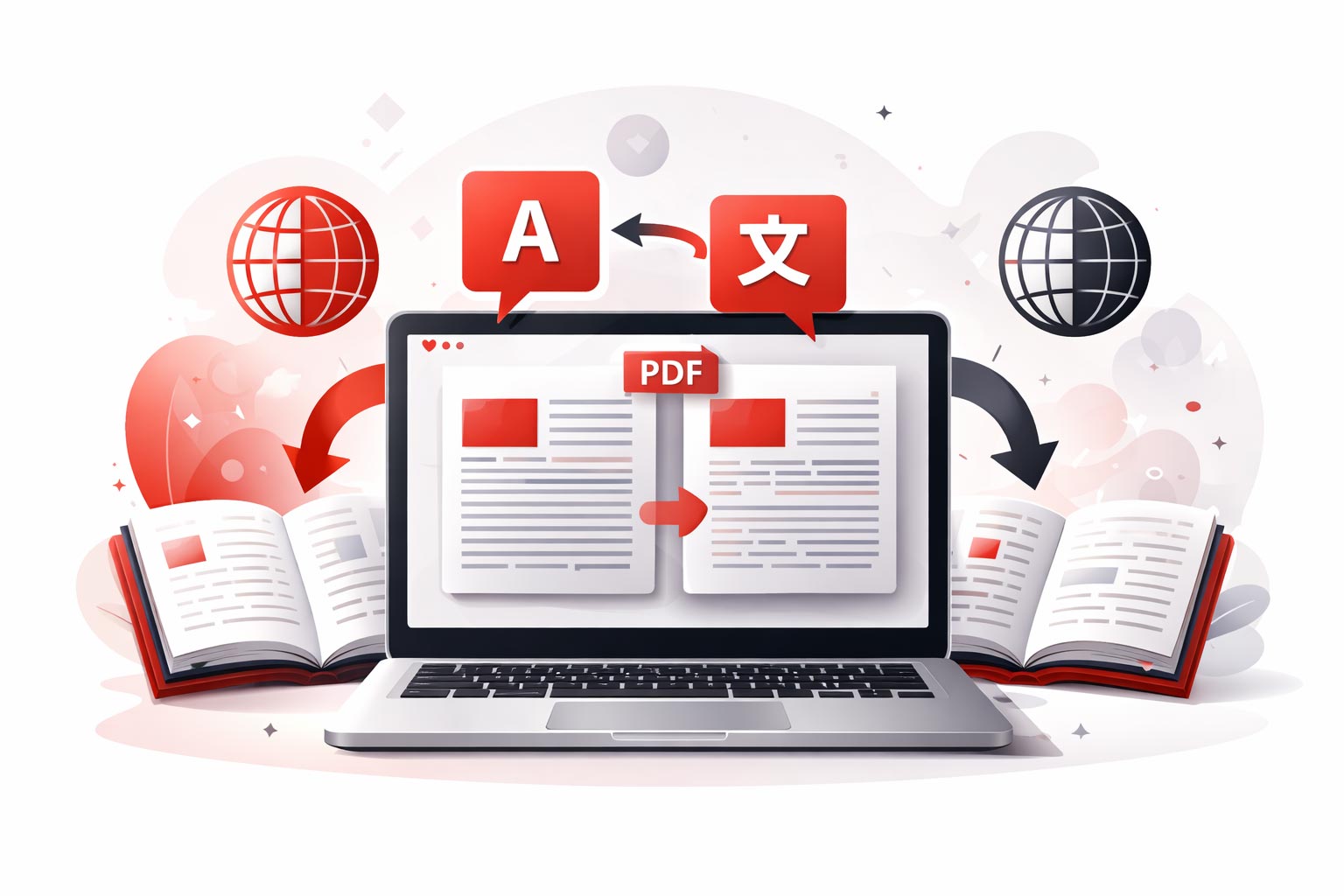
To translate a PDF efficiently, start with a tool that translates the entire document and keeps the page structure intact, then switch to a PDF to Word workflow when the text needs manual edits. Scanned PDFs require OCR to turn images of text into selectable text, and quick quality checks with more than one translator reduce the risk of mistranslated terms. Mobile and desktop options make the same workflows possible while traveling or offline.
Overview:
Choose the right PDF translation workflow
For a full document, use a dedicated PDF translation tool if the goal is to keep pages, columns, headers, and spacing as close to the original as possible. Convert the PDF to an editable format like Word when the priority is rewriting, fixing terminology, or selectively translating sections.
A practical decision rule is to check three things before starting: whether the PDF is scanned, how sensitive the layout is, and how high the accuracy stakes are for the content.
-
If the file is scanned or text cannot be selected, pick a workflow that includes OCR.
-
If the file has complex formatting, tables, or multi-column layouts, translate the PDF directly rather than copy-pasting text.
-
If the output must be edited, reviewed, or combined with manual translation, convert to Word first.
A simple mental model that works well is “Scan, Layout, Stakes”. Scanned content dictates OCR, layout dictates whether direct PDF translation is safer, and stakes dictate how much review and terminology control is needed.
| Workflow | Best for | Main trade-off | Typical outcome |
|---|---|---|---|
| Translate the PDF directly | Whole documents where layout matters | Less granular control over phrasing | Readable PDF that looks like the original |
| Convert PDF to Word, then translate | Editing, terminology cleanup, selective translation | Formatting may shift during conversion | Editable draft that is easy to revise |
| Copy and paste into a text translator | Short excerpts and quick comprehension | Structure and references get lost | Text only, manual reassembly required |
Translate the full PDF with a dedicated tool
Dedicated PDF translation tools are designed to process an entire file in one pass, which reduces the usual formatting damage caused by copy-paste. A common workflow is upload, choose source and target languages, then download the translated document.
For example, the company iLovePDF provides a document-level translator at Translate PDF. According to iLovePDF, the tool can handle both text-based PDFs and scanned PDFs by using OCR to extract text.
OCR in one sentence: Optical character recognition converts images of text into machine-readable text, which is essential when a “PDF” is effectively a stack of scanned pages.
A fast, reliable sequence
-
Open Translate PDF in a browser.
-
Upload the file, select the input language and the output language.
-
Download the translated PDF and spot-check headings, figures, and paragraph order.
Quick quality check: verify names, numbers, and units first. Translation errors often hide in decimals, dates, and technical abbreviations.
Convert PDF to Word when you need control
Converting a PDF into Word is the better option when the translated text must be edited, shortened, or adapted for a specific audience. It is also useful when only parts of a document need translation, such as the abstract, conclusion, or a single chapter.
The iLovePDF PDF to Word converter supports uploads from a device and commonly used cloud storage options. After conversion, the Word document can be translated with a translator of choice, then edited like any other draft.
Practical steps that minimize formatting damage
Step 1: Convert the PDF to Word via PDF to Word.
Step 2: Translate inside the Word file, then correct terminology, headings, and captions.
Step 3: Export back to PDF only after edits are complete, to avoid repeated conversion artifacts.
Decision rule: if a reviewer will mark up the translation, start with Word. If the document is meant to be read, not rewritten, start with direct PDF translation.
Pick an online translator that fits the job
General translation engines can be accurate at the sentence level but still miss meaning across paragraphs, especially in academic and legal writing. The safest approach is to test two translators on the same tricky section and compare terminology consistency.
Useful options for quick comparisons include Google Translate, DeepL, and Microsoft Translator.
A lightweight review method for non-experts
Terminology pass: list 10 key terms, translate them separately, then force consistent wording throughout.
Meaning pass: re-read only topic sentences and conclusions, errors often show up there first.
Structure pass: confirm that headings and numbered references still point to the right places.
Clear cutoff rule: if one ambiguous word could change a decision, such as medical dosage, legal obligations, or safety instructions, treat machine translation as a draft and require human review.
Translate while traveling or working offline
When working away from a laptop, a mobile PDF toolset can prepare documents for translation, convert them into editable formats, and help extract only the necessary pages. iLovePDF offers a mobile option at iLovePDF Mobile, which the company positions as a multi-tool app for common PDF tasks.
Concrete example that matches real travel needs
A student receives a scanned PDF handout in Italian right before a seminar abroad. The fastest workflow is to convert the scan to editable text with OCR in a PDF tool, translate only the required pages, then store the translated version for offline reading on the phone.
For offline work on a computer, iLovePDF also provides a desktop app at iLovePDF Desktop. A practical offline approach is to convert the PDF locally, then translate the extracted text with an offline-capable translation tool available in the environment.
Mini-rule for travelers: if connectivity is unreliable, do file conversion before leaving Wi-Fi, then handle translation and reading offline.
Security, pricing, and data handling basics
Uploading documents for translation raises obvious confidentiality questions, especially for contracts, medical documents, and internal reports. According to iLovePDF, transfers use SSL encryption, files are deleted automatically after about two hours, and the service operates under European legal frameworks that are generally strict on data protection.
On cost, iLovePDF markets a free tier for typical everyday use and a Premium upgrade for higher volume limits and more advanced workflows. Pricing details and feature boundaries can change, so the safest reference point is the product site at ilovepdf.com.
Decision rule: if the document contains sensitive personal data or trade secrets, use tools and settings that meet the organization’s compliance requirements, and avoid unnecessary uploads.
FAQs
Why does PDF translation still matter in 2026?
PDF remains a default format for research, invoices, manuals, and official paperwork. Translation is often needed quickly, and the main challenge is preserving structure while converting the meaning.
What is the most reliable way to translate a PDF without breaking formatting?
Direct PDF translation tools are typically the best first choice because they operate on the document as a whole. Copy-paste translation is better reserved for short excerpts.
Can scanned PDFs be translated?
Yes, but they require OCR first because the “text” is stored as an image. Tools that bundle OCR into the workflow reduce manual cleanup.
Is it possible to translate PDFs on a phone?
Yes. A mobile PDF app can convert files, extract pages, and prepare text for translation while away from a computer, for example via iLovePDF Mobile.
How can someone keep up with new PDF and translation workflows?
Product changes happen frequently, so checking vendor release notes and blogs is practical. For iLovePDF updates, the company publishes articles at iLovePDF Blog.