
AI Chat & Independent PDF Tools Guide

Author: Sandra

  • Translate Any PDF Fast Without Losing Layout

    Translate Any PDF Fast Without Losing Layout

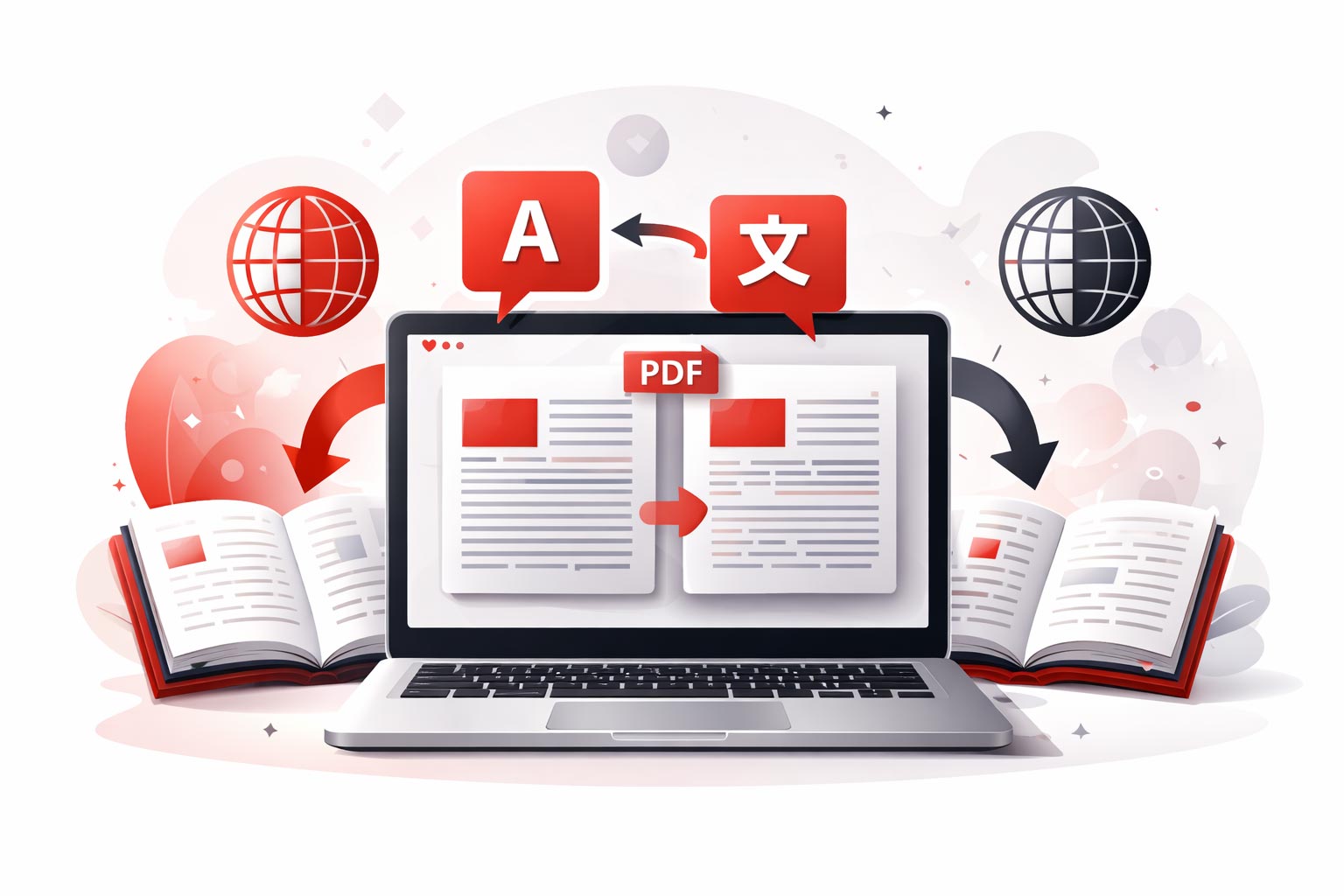
    To translate a PDF efficiently, start with a tool that translates the entire document and keeps the page structure intact, then switch to a PDF to Word workflow when the text needs manual edits. Scanned PDFs require OCR to turn images of text into selectable text, and quick quality checks with more than one translator reduce the risk of mistranslated terms. Mobile and desktop options make the same workflows possible while traveling or offline.

    Overview:

    Choose the right PDF translation workflow

    For a full document, use a dedicated PDF translation tool if the goal is to keep pages, columns, headers, and spacing as close to the original as possible. Convert the PDF to an editable format like Word when the priority is rewriting, fixing terminology, or selectively translating sections.

    A practical decision rule is to check three things before starting: whether the PDF is scanned, how sensitive the layout is, and how high the accuracy stakes are for the content.

    • If the file is scanned or text cannot be selected, pick a workflow that includes OCR.

    • If the file has complex formatting, tables, or multi-column layouts, translate the PDF directly rather than copy-pasting text.

    • If the output must be edited, reviewed, or combined with manual translation, convert to Word first.

    A simple mental model that works well is “Scan, Layout, Stakes”. Scanned content dictates OCR, layout dictates whether direct PDF translation is safer, and stakes dictate how much review and terminology control is needed.

    Workflow Best for Main trade-off Typical outcome
    Translate the PDF directly Whole documents where layout matters Less granular control over phrasing Readable PDF that looks like the original
    Convert PDF to Word, then translate Editing, terminology cleanup, selective translation Formatting may shift during conversion Editable draft that is easy to revise
    Copy and paste into a text translator Short excerpts and quick comprehension Structure and references get lost Text only, manual reassembly required

    Translate the full PDF with a dedicated tool

    Dedicated PDF translation tools are designed to process an entire file in one pass, which reduces the usual formatting damage caused by copy-paste. A common workflow is upload, choose source and target languages, then download the translated document.

    For example, the company iLovePDF provides a document-level translator at Translate PDF. According to iLovePDF, the tool can handle both text-based PDFs and scanned PDFs by using OCR to extract text.

    OCR in one sentence: Optical character recognition converts images of text into machine-readable text, which is essential when a “PDF” is effectively a stack of scanned pages.

    A fast, reliable sequence

    • Open Translate PDF in a browser.

    • Upload the file, select the input language and the output language.

    • Download the translated PDF and spot-check headings, figures, and paragraph order.

    Quick quality check: verify names, numbers, and units first. Translation errors often hide in decimals, dates, and technical abbreviations.

    Convert PDF to Word when you need control

    Converting a PDF into Word is the better option when the translated text must be edited, shortened, or adapted for a specific audience. It is also useful when only parts of a document need translation, such as the abstract, conclusion, or a single chapter.

    The iLovePDF PDF to Word converter supports uploads from a device and commonly used cloud storage options. After conversion, the Word document can be translated with a translator of choice, then edited like any other draft.

    Practical steps that minimize formatting damage

    Step 1: Convert the PDF to Word via PDF to Word.

    Step 2: Translate inside the Word file, then correct terminology, headings, and captions.

    Step 3: Export back to PDF only after edits are complete, to avoid repeated conversion artifacts.

    Decision rule: if a reviewer will mark up the translation, start with Word. If the document is meant to be read, not rewritten, start with direct PDF translation.

    Pick an online translator that fits the job

    General translation engines can be accurate at the sentence level but still miss meaning across paragraphs, especially in academic and legal writing. The safest approach is to test two translators on the same tricky section and compare terminology consistency.

    Useful options for quick comparisons include Google Translate, DeepL, and Microsoft Translator.

    A lightweight review method for non-experts

    Terminology pass: list 10 key terms, translate them separately, then force consistent wording throughout.

    Meaning pass: re-read only topic sentences and conclusions, errors often show up there first.

    Structure pass: confirm that headings and numbered references still point to the right places.

    Clear cutoff rule: if one ambiguous word could change a decision, such as medical dosage, legal obligations, or safety instructions, treat machine translation as a draft and require human review.

    Translate while traveling or working offline

    When working away from a laptop, a mobile PDF toolset can prepare documents for translation, convert them into editable formats, and help extract only the necessary pages. iLovePDF offers a mobile option at iLovePDF Mobile, which the company positions as a multi-tool app for common PDF tasks.

    Concrete example that matches real travel needs

    A student receives a scanned PDF handout in Italian right before a seminar abroad. The fastest workflow is to convert the scan to editable text with OCR in a PDF tool, translate only the required pages, then store the translated version for offline reading on the phone.

    For offline work on a computer, iLovePDF also provides a desktop app at iLovePDF Desktop. A practical offline approach is to convert the PDF locally, then translate the extracted text with an offline-capable translation tool available in the environment.

    Mini-rule for travelers: if connectivity is unreliable, do file conversion before leaving Wi-Fi, then handle translation and reading offline.

    Security, pricing, and data handling basics

    Uploading documents for translation raises obvious confidentiality questions, especially for contracts, medical documents, and internal reports. According to iLovePDF, transfers use SSL encryption, files are deleted automatically after about two hours, and the service operates under European legal frameworks that are generally strict on data protection.

    On cost, iLovePDF markets a free tier for typical everyday use and a Premium upgrade for higher volume limits and more advanced workflows. Pricing details and feature boundaries can change, so the safest reference point is the product site at ilovepdf.com.

    Decision rule: if the document contains sensitive personal data or trade secrets, use tools and settings that meet the organization’s compliance requirements, and avoid unnecessary uploads.

    FAQs

    Why does PDF translation still matter in 2026?

    PDF remains a default format for research, invoices, manuals, and official paperwork. Translation is often needed quickly, and the main challenge is preserving structure while converting the meaning.

    What is the most reliable way to translate a PDF without breaking formatting?

    Direct PDF translation tools are typically the best first choice because they operate on the document as a whole. Copy-paste translation is better reserved for short excerpts.

    Can scanned PDFs be translated?

    Yes, but they require OCR first because the “text” is stored as an image. Tools that bundle OCR into the workflow reduce manual cleanup.

    Is it possible to translate PDFs on a phone?

    Yes. A mobile PDF app can convert files, extract pages, and prepare text for translation while away from a computer, for example via iLovePDF Mobile.

    How can someone keep up with new PDF and translation workflows?

    Product changes happen frequently, so checking vendor release notes and blogs is practical. For iLovePDF updates, the company publishes articles at iLovePDF Blog.
  • Free AI PDF Tools Reshape Document Work

    Free AI PDF Tools Reshape Document Work

    In 2026, PDF work is shifting from paid desktop suites to free apps and browsers that now include AI summaries, collaboration, and even advanced editing. The practical result is simple, many everyday document tasks no longer require a subscription, but users must decide when cloud AI is worth the compliance and privacy tradeoffs.

    Overview:

    Why free PDF tools now feel premium

    Free PDF tools in 2026 increasingly deliver capabilities that used to sit behind subscription walls, including AI assistance, stronger rendering quality, and smoother accessibility. The market shift is driven by large platform updates and a wave of capable free desktop editors that remove typical annoyances like watermarks. For users, the center of gravity is moving from “viewer only” software to an intelligent workspace that can read, rewrite, and prepare documents for sharing.

    A key technical lever is the PDF rendering engine, the component that converts a PDF into what is actually displayed on screen. Better engines reduce layout glitches, improve speed on complex files, and can strengthen security and accessibility because text structure is interpreted more reliably.

    Mini-model for the 2026 PDF market

    Three forces separate winners from leftovers:

    Smarts, built-in AI for summarizing, extracting, translating, and redacting.

    Surface, where the tool lives, such as mobile apps, browsers, and offline desktop suites.

    Safety, the privacy posture, including offline processing, auditability, and access controls.

    What Adobe changed on phones

    According to Adobe, the free Acrobat Reader app gained a deeper layer of AI features that previously signaled “premium” software. One standout addition is turning AI-generated summaries into an audio experience that plays like a podcast, aimed at absorbing long reports while commuting or multitasking.

    The app also adds collaboration features through “PDF Spaces” and brings design tooling into the workflow via integration with Adobe Express. In market terms, this looks like a defensive move: raise the baseline of the free tier so fewer users feel the need to test competitors just to get modern AI assistance.

    Concrete example that matches real work

    A student receives a 40-page research brief as a PDF. The mobile app generates a summary, converts it into audio for the trip to campus, then the student returns to the original document to search for specific tables and quotes. The workflow replaces a common paid pattern: summarize in one tool, listen in another, then annotate later.

    The big browser upgrade for PDFs

    On Windows desktops, the biggest “free upgrade” arrives through the browser rather than a separate app. Microsoft is replacing the built-in Edge PDF viewer engine with the Adobe Acrobat PDF engine, with the legacy engine scheduled to be removed by June 2026.

    For a massive installed base, this effectively delivers higher-grade rendering, stronger accessibility, and improved security without asking users to install anything new. Accessibility is particularly visible in read-aloud features, where more accurate text structure can produce more reliable spoken output, especially on complex layouts.

    Helpful starting points: Microsoft Edge and Adobe’s background on its Acrobat PDF technology.

    Which free editors matter in practice

    Beyond the major platforms, free desktop editors have become more capable, and some now offer serious editing without paywalls or watermarks. Two names frequently highlighted in 2026 comparisons are PDFgear and PDF24 Creator, and they represent two different philosophies: AI-assisted editing versus privacy-first offline tooling.

    What separates the leading free options

    PDFgear focuses on editing that feels closer to a word processor, including modifying existing text while preserving the original layout. It also includes a chat-style AI copilot that can summarize, extract structured information, translate content, and in some cases drive actions through natural language commands. Product information is available at pdfgear.com.

    PDF24 Creator skips the chat AI layer, but delivers a broad, ad-free offline toolbox for merging, splitting, and form work. For sensitive legal or HR documents, offline operation can be the deciding factor because the file does not need to leave the machine for many common tasks. The tool suite is available at pdf24.org.

    Tool Where it runs Core strength in 2026 AI angle Best fit
    Adobe Acrobat Reader (free) Mobile app AI summaries to audio, collaboration, design integration AI-assisted summarization and audio conversion Reading and consuming long PDFs fast
    Microsoft Edge PDF viewer Browser on Windows Adobe Acrobat PDF engine for rendering, security, accessibility Not primarily an AI editor, focuses on quality and access Reliable everyday viewing at scale
    PDFgear Desktop Direct text editing with layout retention Chat-style copilot for summarize, extract, translate Hands-on editing with help from AI
    PDF24 Creator Desktop (offline) Large toolkit for merge, split, forms, conversions No chat AI, prioritizes local processing Privacy-sensitive workflows and offline control
    Wondershare PDFelement Desktop and mobile Pro editing plus advanced AI features via freemium Multi-model AI options, translation, redaction Power users who can accept licensing for heavy use

    The compliance reality behind AI documents

    As AI moves into document workflows, legal and compliance questions stop being theoretical. Since August 2024, companies operating in the EU have faced a stricter policy environment for deploying AI systems, and document tools that send content to cloud services can become part of that risk picture. A practical starting reference is the EU AI Act text on EUR-Lex.

    Separate from AI-specific rules, many organizations still need basic operational discipline around data handling. If a tool processes personal data, documentation requirements can apply, including records of processing activities under GDPR Article 30, as described in the official regulation on EUR-Lex.

    Plain-language checklist for AI PDF features

    Know where the file goes, cloud AI features may transmit content for processing, which matters for contracts, health data, and HR files.

    Separate summary from source, AI summaries can miss edge cases, so decisions should reference the original text when stakes are high.

    Prefer offline for sensitive categories, an offline toolkit can reduce exposure when confidentiality is the top constraint.

    A fast rule for picking the right tool

    Use this decision rule: if a document contains personal data, confidential business information, or regulated content, default to offline processing and limit AI features to approved environments. If the document is low-risk but time-critical, prioritize tools with high-quality rendering and AI assistance to speed comprehension and extraction.

    One workflow that covers most office scenarios

    Step 1: Open the file in Edge for reliable viewing and accessibility, especially if the PDF is complex or scanned.

    Step 2: For heavy edits, move to a dedicated editor, choose an AI-assisted editor for rewriting and extraction, choose an offline suite for sensitive material.

    Step 3: Before sharing, use redaction tools when personal data appears, then export a final PDF for distribution.

    For users who want enterprise-style AI options, freemium products such as Wondershare PDFelement market multi-model AI selection and advanced features like translation across many languages and removal of personal data, typically gated behind licensing but often accessible through trial plans.