
AI Chat & Independent PDF Tools Guide

iLovePDF conversion

  • Convert Photos to PDF on Any Device

    Convert Photos to PDF on Any Device

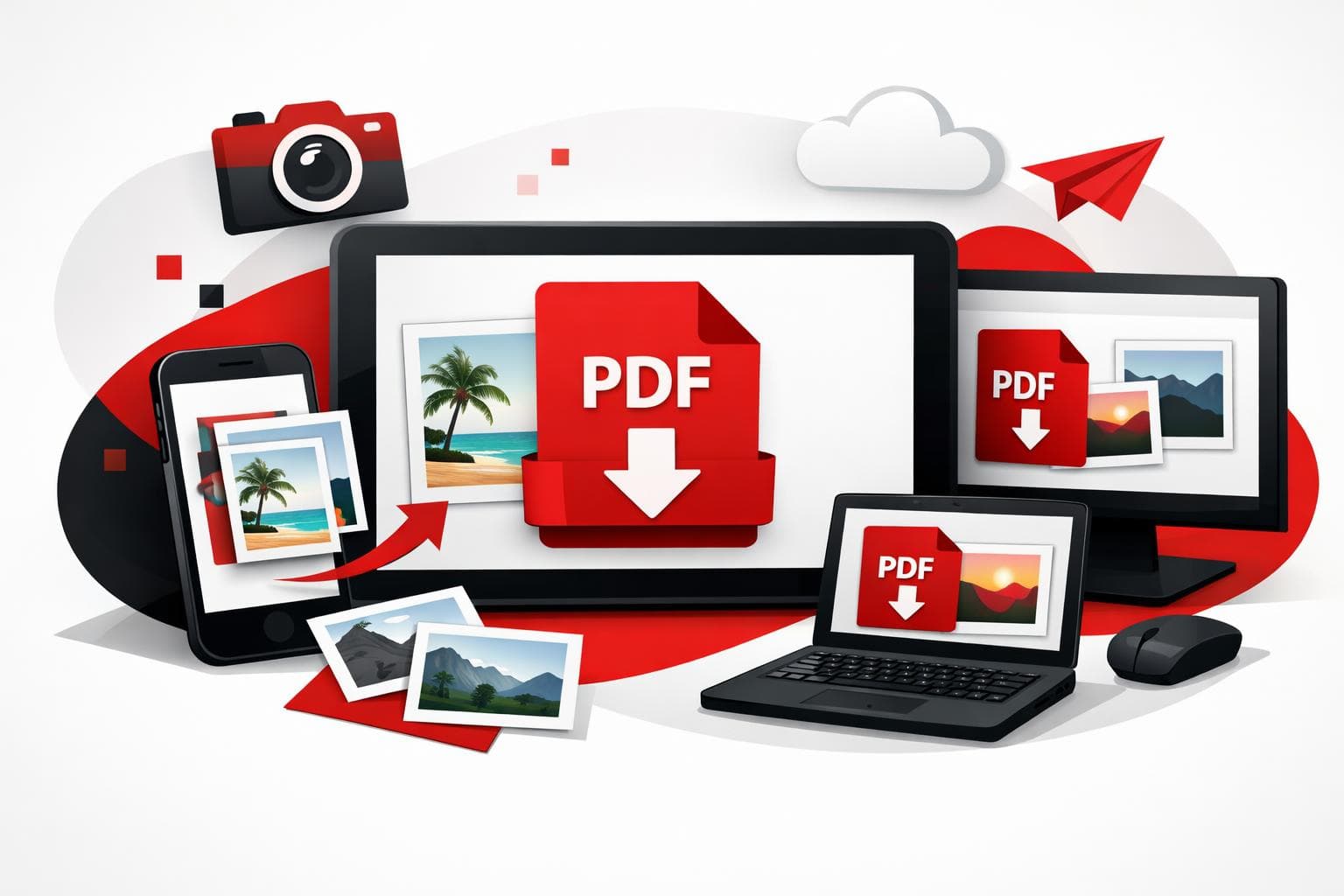
    To turn one photo, or a whole batch, into a shareable PDF, pick a path based on where the images live: browser for speed, phone for capture, desktop for offline control. iLovePDF offers a web converter, mobile apps, and a desktop app that all produce the same outcome, a PDF that packages images into pages.

    Online conversion with browser level speed

    The browser option is the quickest way to package images into a single file that prints cleanly and uploads easily. It is also the simplest option for occasional work because there is nothing to install.

    Start with the JPG to PDF tool. Images can be pulled from a device, and the interface also shows imports from Google Drive and Dropbox.

    • Step 1 Upload one image, or select multiple images for a batch.
    • Step 2 Set page orientation, page size, and margins to match the destination, for example A4 for international forms, or US Letter for US offices.
    • Step 3 If the goal is a single file, enable the option to merge all images into one PDF.
    • Step 4 Convert, then download the PDF.

    Working with iPhone photos in HEIC format often adds friction on Windows PCs. The company documents a HEIC workflow and common compatibility issues in its guide at How to convert HEIC to PDF, which is useful when a photo opens fine on Apple devices but fails in a desktop upload portal.

    Mobile conversion when the camera is the source

    On mobile, the value is immediacy. A phone can capture, convert, and share a PDF before a laptop even boots, which matters for receipts, forms, and field work.

    Use the iLovePDF mobile apps, then install from the iOS App Store listing or from Google Play.

    • Step 1 Open the app, choose the image to PDF converter, then select photos from storage or capture new ones.
    • Step 2 Choose page sizing and margins so the PDF matches the way it will be viewed or printed.
    • Step 3 Convert and save, then share the PDF through email or messaging.

    Practical example A job application portal asks for one PDF, not 12 separate photos. A phone can snap each page of a paper certificate, convert the set into one PDF, then email it as a single attachment without touching a scanner.

    Offline conversion for maximum local control

    Desktop conversion is the right fit when internet access is unreliable, or when documents are sensitive enough that uploading feels like an unnecessary risk. According to iLovePDF, the desktop app processes files directly on the device, which keeps the workflow local. See iLovePDF Desktop.

    • Step 1 Install and open the desktop app, then select the image to PDF tool.
    • Step 2 Add images from local storage, set page layout options, then run the conversion.
    • Step 3 Save the resulting PDF to a local folder, ready for upload when connectivity returns.

    Desktop tools also shine for repetitive workloads, such as converting the same form photos every week, or processing a folder of images in a single session.

    A simple framework for choosing the best method

    PDF conversion looks like a commodity, but the tradeoffs are consistent across the market. The cleanest decision comes from a three part lens.

    • Convenience How fast the conversion happens in the moment.
    • Control How much of the workflow stays on the device versus in a browser upload.
    • Compliance Whether the method supports internal rules for handling personal or regulated documents.

    Decision rule If the file is confidential, or internet access is uncertain, use the desktop app. Otherwise, use the browser for quick one off conversions, and use the phone when the camera is the starting point.

    Method Best for Internet needed Where processing happens Batch to one PDF
    Web tool Fast conversion from a laptop or desktop Yes Uploaded, processed remotely Yes
    Mobile app Converting right after taking photos Usually yes App workflow, may use cloud features Yes
    Desktop app Sensitive files and offline work No Local device Yes

    What the service says about file safety

    File conversion tools sit in a trust sensitive category because they often require an upload. According to the company security documentation, transfers use encrypted connections, files are removed automatically within two hours after processing, and the service offers an option to delete files manually from the download screen. See iLovePDF Security.

    For teams, the practical takeaway is simple. Treat any upload based converter as suitable for everyday documents, and default to local processing when handling contracts, IDs, HR documents, or anything covered by internal retention rules.

    Extra tools that solve the next PDF problem

    Photo to PDF is usually the first step, then the next bottleneck shows up immediately, size limits, editing needs, or scanning paper into a clean file.

    • Compress Reduce file size for upload portals using Compress PDF.
    • Edit Add an image or annotate an existing PDF with Edit PDF.
    • Convert back Turn pages into images using PDF to JPG.
    • Scan Capture paper documents to a PDF via QR flow using Scan to PDF.
  • Convert PDFs Cleanly Across Devices

    Convert PDFs Cleanly Across Devices

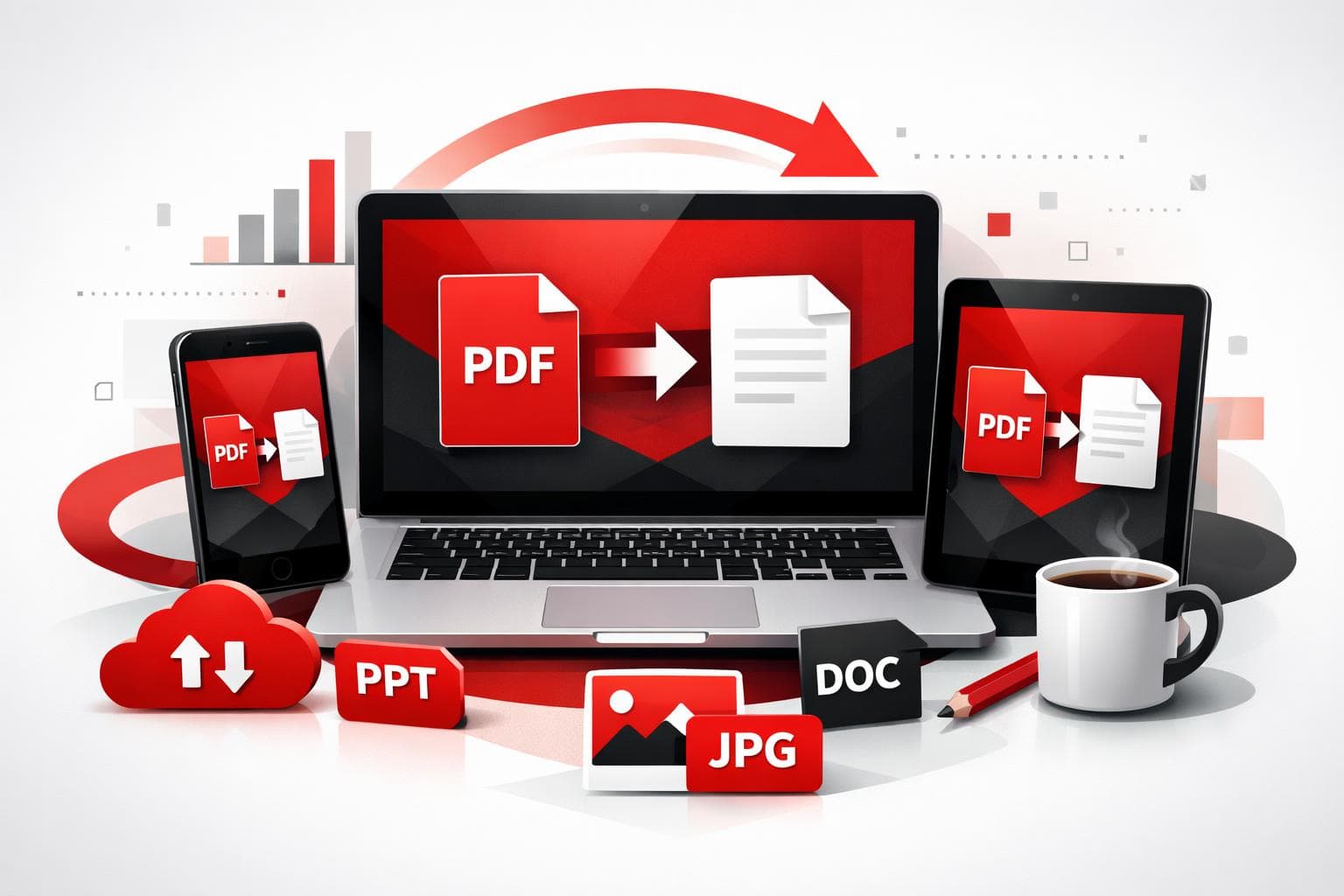
    Reliable PDF conversion comes down to one choice, whether the PDF is a final deliverable meant to look identical everywhere, or a source file that needs editing. iLovePDF groups web, mobile, and desktop tools to convert between PDF, Office files, images, web pages, and archival PDF/A, with OCR available when the file is a scan.

    Start by deciding what the PDF should become

    PDF is designed for visual consistency, not day to day editing. That is why conversions work best when the next step is clear, either distribute a document that must keep its layout, or move content back into an editable format like Word, Excel, or PowerPoint.

    Decision rule If the file will be edited again this week, convert out of PDF, if it will be reviewed, signed, uploaded, or archived, convert into PDF and keep it there.

    • Fidelity Keep the page looking identical, prioritize PDF, PDF/A, and image exports.
    • Flexibility Make text and tables editable, prioritize Word, Excel, PowerPoint, and OCR for scans.
    • Future proofing Preserve documents for years, prioritize PDF/A with the required conformance level.

    Most converters on iLovePDF follow the same rhythm, open the tool, upload from local storage or connected cloud drives, pick the relevant options, convert, then download the result. The main difference is the one setting that decides quality, such as OCR on scanned PDFs, or page size and margins for image to PDF.

    What needs to happen next Best fit tool Setting that matters most What it optimizes for
    Send a document that must look the same everywhere Word to PDF, Excel to PDF, PowerPoint to PDF Batch selection and final review Layout stability across devices
    Edit text that arrived as a PDF PDF to Word OCR on scans Editable paragraphs with fewer retypes
    Reuse a PDF as a slide deck PDF to PowerPoint Slide structure check Fast draft presentations from existing pages
    Analyze numbers locked in a report PDF to Excel OCR if tables are images Structured data that can be filtered and charted
    Post or reuse pages as images PDF to JPG Page export versus image extraction Shareable visuals and asset reuse
    Meet archiving or compliance requirements PDF to PDF/A PDF/A conformance level Long term readability and preservation

    Turn images into PDFs and PDFs into images

    Image conversions are ideal when the raw material is visual, scans, photos, screenshots, or hand marked pages. Converting images into a PDF also makes it easier to store a set of files as one document, and to annotate, search, and share in a consistent container.

    Convert images to a single PDF

    The JPG to PDF tool also accepts common image formats, including PNG, TIFF, SVG, BMP, HEIC, RAW, and WEBP. After upload, set page orientation, choose page size, and decide whether margins should frame the image or let it fill the page.

    Convert a PDF into JPG files

    Use PDF to JPG when a PDF needs to become shareable visuals, such as a quick carousel draft, a handout turned into slide images, or a set of pages for design markup. The key fork is whether every page becomes a JPG, or only embedded images should be extracted as separate files.

    Move between PDF and Office without chaos

    Office conversions are where quality expectations are highest, because people want to edit without rebuilding the document. The practical goal is not perfect magic, it is preserving enough structure that edits start immediately, not after an hour of cleanup.

    PDF to Word for real edits

    PDF to Word is the default path when the PDF contains paragraphs, headings, and placed images that need revisions. For scanned documents, OCR turns an image of text into selectable text, a short explanation is available in iLovePDF’s What is OCR guide.

    Word to PDF for locked down sharing

    Word to PDF is best when the document has to open reliably for someone who may not have the same version of Word. It also supports multiple Word formats, including DOC, DOCX, ODT, STW, SDW, and SXW.

    PDF to PowerPoint and back

    PDF to PowerPoint turns pages into an editable slide structure, useful for reusing reports and handouts in presentations. When the deck is ready for distribution, PowerPoint to PDF keeps fonts and layout stable for classmates, colleagues, and clients.

    PDF to Excel for analysis

    PDF to Excel is the fastest way to stop manually recreating tables. If the document is a scan, OCR helps reconstruct text and tables so the result behaves like a spreadsheet, not a pasted image.

    Practical example When a proposal arrives as a PDF but needs edits, convert it with PDF to Word, revise in Word, convert back using Word to PDF, then combine the final proposal with supporting documents using Merge PDF.

    Capture web pages and archive to PDF A

    Two conversions focus on time, not convenience. One freezes the web page as evidence or reading material, the other makes a document safer for long term storage.

    HTML to PDF for web capture

    HTML to PDF creates a PDF snapshot of a web page that may change, disappear, or load differently on other devices. Formatting controls typically include screen size, page size, orientation, margins, and ad blocking, and a preview helps catch layout issues before export.

    PDF to PDF/A for long term preservation

    PDF to PDF/A converts a standard PDF into an ISO standardized archival variant. The essential choice is the conformance level requested by a policy, client, or agency, because different levels enforce different rules around fonts, metadata, tagging, and embedded content.

    For a deeper explanation of the PDF/A variants, iLovePDF also publishes Meet the PDF/A family.

    Choose web mobile or desktop for the same job

    iLovePDF runs conversions in three places, the browser, the mobile app, and a desktop app. The best option depends on speed needs, whether work happens on the move, and how sensitive the document is.

    Web tools for quick one off conversions

    The web interface is the fastest start for most conversions, especially when files are already in cloud storage. Common tasks like Compress PDF, Organize PDF, and Edit PDF fit naturally after a conversion.

    Mobile for scanning and on the move fixes

    The iLovePDF Mobile app is built for iOS and Android workflows, such as turning a photo into a PDF, converting a file before an upload deadline, or signing a document away from a laptop. The iOS listing is available on the App Store.

    Desktop for offline work and local processing

    iLovePDF Desktop targets heavier tasks and offline workflows. According to iLovePDF, desktop processing can keep files on the computer rather than relying on a browser session, which can matter for privacy constrained environments.

    For web processing, iLovePDF describes its file handling and retention approach on its Security and data protection page.

    A quick checklist before sending the file

    Conversions succeed when the output matches the next action, not when the file simply opens. A short review prevents the most common errors, especially in PDFs converted back into editable Office formats.

    • Text test Confirm text is selectable, if not, rerun using OCR where available.
    • Table test In Excel exports, verify columns did not shift, and totals still align.
    • Page test Check orientation, margins, and page order, then fix with Organize PDF if needed.
    • Size test If upload limits are tight, use Compress PDF and recheck legibility.
    • Trust test If the PDF is the final deliverable, consider locking the workflow with a password via Protect PDF or collecting signatures via Sign PDF.

    With the direction decided and the right single setting selected, most PDF conversions become repeatable, predictable, and fast.