
AI Chat & Independent PDF Tools Guide

iLovePDF privacy

  • Why iLovePDF Shows Page Not Found Messages

    Why iLovePDF Shows Page Not Found Messages

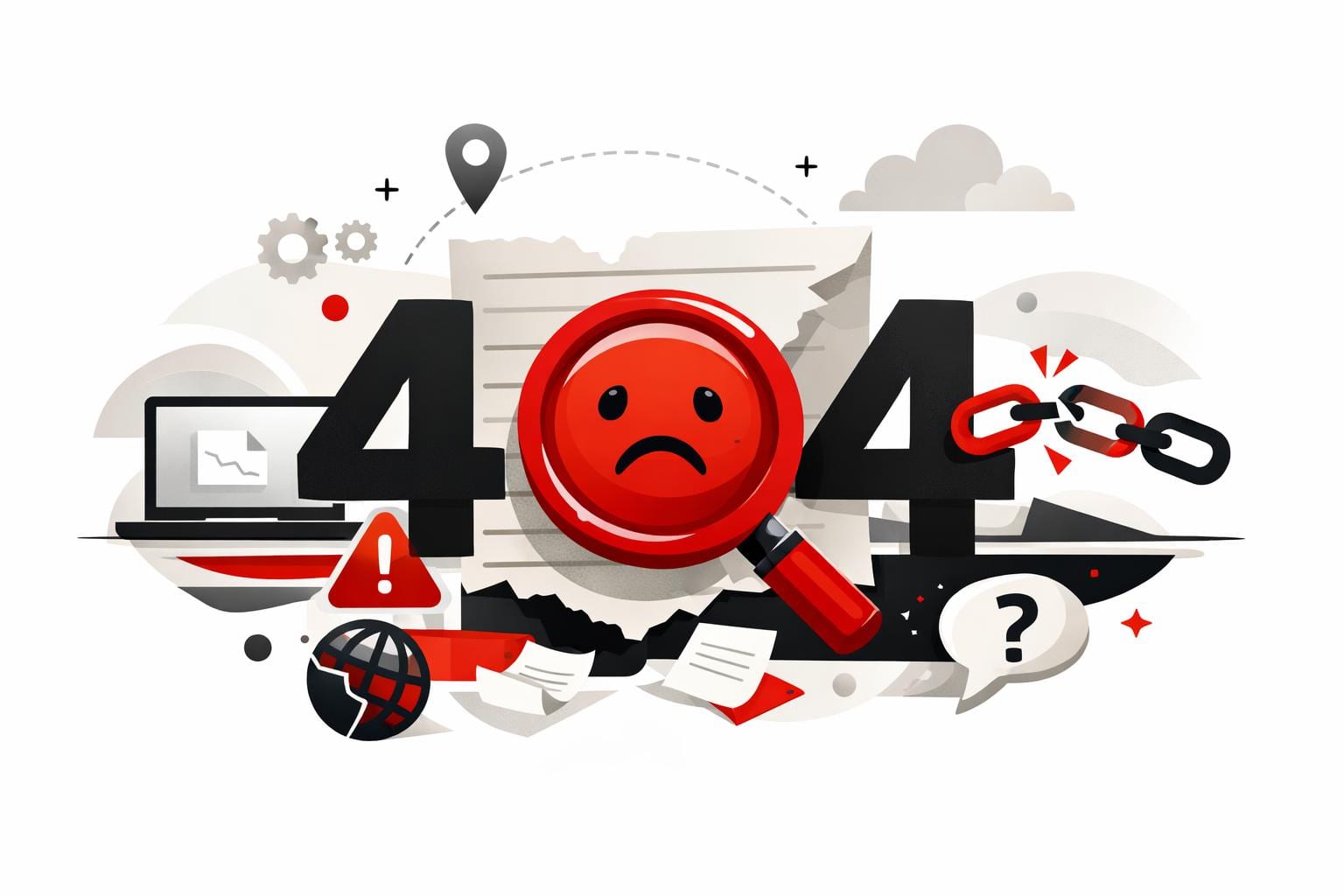
    This iLovePDF screen combines a basic “page not found” error with a cookie consent prompt. In plain terms, the link being opened does not resolve to a real page, and the site is asking permission to use personal data from the device for advertising, measurement, and product research, with controls available in its cookie settings.

    When a link fails, what it means

    A “page not found” message is a routing problem, the browser asked for a URL that the server cannot serve. The most common causes are a typo in the address, an outdated bookmark, or a link that was copied with missing characters.

    The same screen can also surface connectivity warnings. If the page hints at an internet connection issue, the URL might be correct but the session is failing due to a captive Wi Fi portal, a blocked script, a strict privacy extension, or a transient network error.

    Decision rule for fast troubleshooting

    If the address bar contains a long path or tracking parameters, first retry with the clean homepage link. If the homepage loads but the specific page does not, assume the URL is wrong or retired, then navigate from the tool index instead of guessing the path.

    Where to find the PDF features listed in the menu

    The navigation on the error screen is effectively a compact map of the product. It points to a browser based toolbox for common PDF jobs, plus separate desktop and mobile apps, and related services for images, e signing, and APIs.

    A quick market model to understand the stack

    The easiest way to categorize what is shown in that header and footer is a three lane model: Web utilities for fast one off tasks, client apps for repeat workflows and offline friendly use, and a developer platform for automation.

    • Web utilities, merge, split, compress, convert to and from Office and images, rotate pages, add watermarks, add page numbers, crop, repair, and OCR.
    • PDF security tools, unlock, protect, sign, redact, and compare.
    • Apps, dedicated downloads at Desktop and Mobile.
    • Related products, iLoveIMG, iLoveSign, and iLoveAPI.

    Concrete example that matches the menu

    Suppose a shared link to a specific tool page fails, but the goal is simply to reduce upload size for email. Open the homepage, select Compress PDF from the tool list, upload the file, then download the smaller version. This avoids relying on a brittle deep link.

    The consent message on the page draws a sharp line between file content and tracking data. It states that personal data, not the uploaded documents or account details, may be processed for ad personalization, performance measurement, audience research, and service development, and it highlights storage and access on the device through cookies and identifiers.

    The banner also signals scale and sharing: it references sharing with 141 TCF vendors and 63 advertising partners. It further notes that some parties may rely on legitimate interest, with the option to object via preference controls.

    Banner purpose What it typically involves Practical implication
    Personalised advertising and content Using identifiers and browsing signals to tailor ads or on site promotions More targeting, more data sharing across ad partners
    Advertising and content measurement Counting views, clicks, conversions, and attribution across sessions Better analytics, more persistent tracking across visits
    Audience research and services development Aggregated behavior analysis to improve features and UX Product improvement, but still a data collection channel
    Store and or access information on a device Cookies, unique identifiers, and device level signals Enables remembering settings, and can enable cross site tracking

    Two buttons usually frame the choice: a broad “accept all” path, and a “manage options” path that is slower but more precise. For readers who care about minimizing tracking, the second path is the meaningful one.

    How to manage consent and reduce tracking

    The screen points to cookie controls inside the help area. The most direct route is the cookies page, which sits under the legal and privacy hub at Legal and Privacy and Cookies.

    Practical steps that do not require guesswork

    • Adjust consent, use the manage options flow, then disable ad personalization first, before fine tuning measurement and research.
    • Revisit later, consent can be changed or withdrawn from the cookie page, not only at the moment the banner appears.
    • Check policies, review Privacy and Terms for the formal definitions behind the banner language.
    • Use a different execution mode for sensitive work, for documents that should avoid browser tracking surfaces, consider the desktop route at iLovePDF Desktop and review the security positioning at Security.

    For most users, the simplest privacy optimization is to reject ad personalization while keeping only what is needed for the site to function. The service remains usable, and tracking intensity typically drops without turning the session into a troubleshooting project.

    Finally, the footer indicates the brand and date context, including a 2026 copyright line and links to business and education paths. Those details matter because they hint at why consent banners are prominent, the product is monetized through a mix of subscriptions, business plans, and advertising supported free usage.
  • Convert PDFs to Office Files Without Losing Layout

    Convert PDFs to Office Files Without Losing Layout

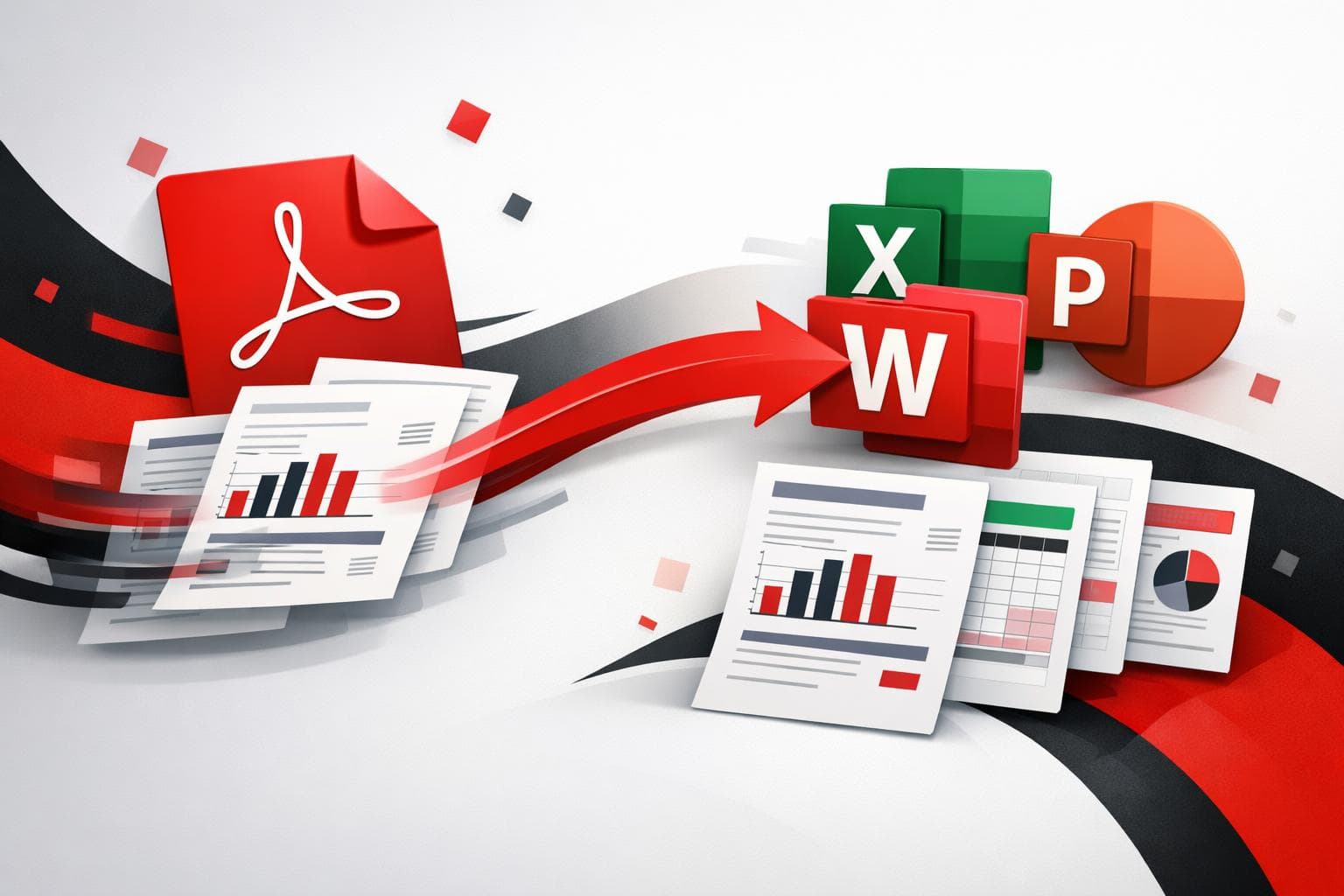
    To edit a PDF, the fastest path is usually conversion into an Office file, Word for text edits, Excel for tables, or PowerPoint for slides, then finishing the job in the app that matches the content. iLovePDF provides that conversion in three routes, web, desktop, and mobile, with Premium options such as batch processing and OCR for scanned pages.

    Why PDFs resist clean edits

    A PDF is built to preserve a page exactly as it looks, not to preserve the underlying structure that editors rely on. That difference matters because Word and Excel expect reusable building blocks such as paragraphs, headings, rows, and cells, while many PDFs only contain positioned text and graphics.

    Conversion tools try to reconstruct that structure from visual layout. Results depend on how the PDF was created, a digitally generated PDF with selectable text typically converts better than a scanned document that is basically an image.

    A three step web conversion routine

    For quick edits, a browser converter is often the most convenient option, no installation, no admin rights, and no waiting. iLovePDF’s online PDF to Office tools accept drag and drop uploads, and also support importing files from cloud storage such as Google Drive and Dropbox.

    Quick workflow

    According to iLovePDF, its PDF to Word, PDF to Excel, and PDF to PowerPoint converters are powered by Solid Documents. The tool pages list Solid Documents as the conversion engine behind these exports.

    Option What it optimizes for Best fit Internet needed
    Web tools Speed and convenience Occasional conversions and fast edits Yes
    Desktop app Local processing and offline work Confidential files, restricted networks, high volume No for core conversions
    Mobile app Capture, annotate, sign, and share Field work, quick approvals, lightweight edits Often, especially for conversions

    A practical decision model that holds up in real teams is the RVM test, risk, volume, mobility. It forces the right tool choice before anyone uploads sensitive material just because it is faster.

    • Risk, if the document is sensitive, prefer the desktop route that processes files locally.
    • Volume, if many PDFs must be converted in one run, look for batch processing, iLovePDF positions this as a Premium capability on its conversion guide and pricing page.
    • Mobility, if the work happens in hallways, on job sites, or between meetings, the mobile workflow typically wins.

    For Premium features such as OCR and batch processing, iLovePDF publishes plan details on its pricing page.

    How to pick the right Office output

    Choosing the output format is not a cosmetic choice, it determines how much cleanup happens after conversion. A useful rule is to convert into the format that matches the document’s dominant structure, prose goes to Word, grids go to Excel, and page designed visuals go to PowerPoint.

    Word for edits and rewrites

    PDF to Word is the default when the goal is rewriting text, deleting sections, or adding new paragraphs while keeping a familiar page layout. If the PDF contains scanned pages, the tool indicates that OCR is required to extract editable text, and OCR is positioned as a Premium option.

    Excel for tables and numbers

    PDF to Excel is the right call when the value is in rows and columns, such as invoices, statements, or price lists. The converter offers layout choices, including placing content into one sheet or splitting it across multiple sheets, which can reduce manual rearranging after export.

    PowerPoint for decks and visuals

    PDF to PowerPoint is best when the PDF is already presentation shaped, and the goal is to reuse charts, tables, and images in an editable deck. It is often faster than rebuilding slides from scratch, especially when visual elements must stay aligned.

    Concrete example, a finance analyst receives a monthly vendor summary as a PDF. The tables go through PDF to Excel for analysis, key charts then move into PowerPoint for a leadership update, and the narrative section converts to Word for revision.

    A simple decision rule avoids most conversion frustration: if text can be highlighted and copied in the PDF viewer, standard conversion is usually enough, if it cannot, OCR is needed to turn image based text into editable content.

    When local conversion is the safer bet

    Teams dealing with regulated data, client contracts, or internal HR files often hit a policy wall with browser uploads. iLovePDF addresses that use case with iLovePDF Desktop, positioned as a Windows and Mac app that can run heavy PDF tasks offline while keeping processing on the local machine.

    This route is also a practical choice in low connectivity environments, such as travel, job sites, or segmented corporate networks. It reduces the operational friction of cloud workflows without changing the basic idea, convert the PDF into an Office file, then edit in Office.

    What a phone workflow is actually good at

    A mobile converter is not just a smaller version of a web tool. The iLovePDF Mobile page positions the app around scanning, annotations, signing, and file organization, the tasks that happen when a laptop is not available.

    It is especially useful for fast turnaround work, compressing a PDF for sending, adding markup during review, signing on the spot, or digitizing paperwork into PDFs. Conversion to Office can fit into that flow when edits are needed immediately and the source document is already on the device.

    A quick safety check before uploading files

    Online conversion is convenient, but it is still a data handling decision. iLovePDF’s own security and data protection page describes end to end encryption for files during processing, and states that files are automatically deleted within two hours after being processed.

    For organizations with strict rules, the cleanest policy is binary: if the document contains regulated or highly confidential content, use local processing with the desktop app, otherwise a web converter is acceptable for speed. That rule is easy to enforce, and easy to audit.

    For additional context on the full PDF to Office workflow described by the company, the iLovePDF guide How to convert PDF to Office summarizes the web, desktop, and mobile options in one place.