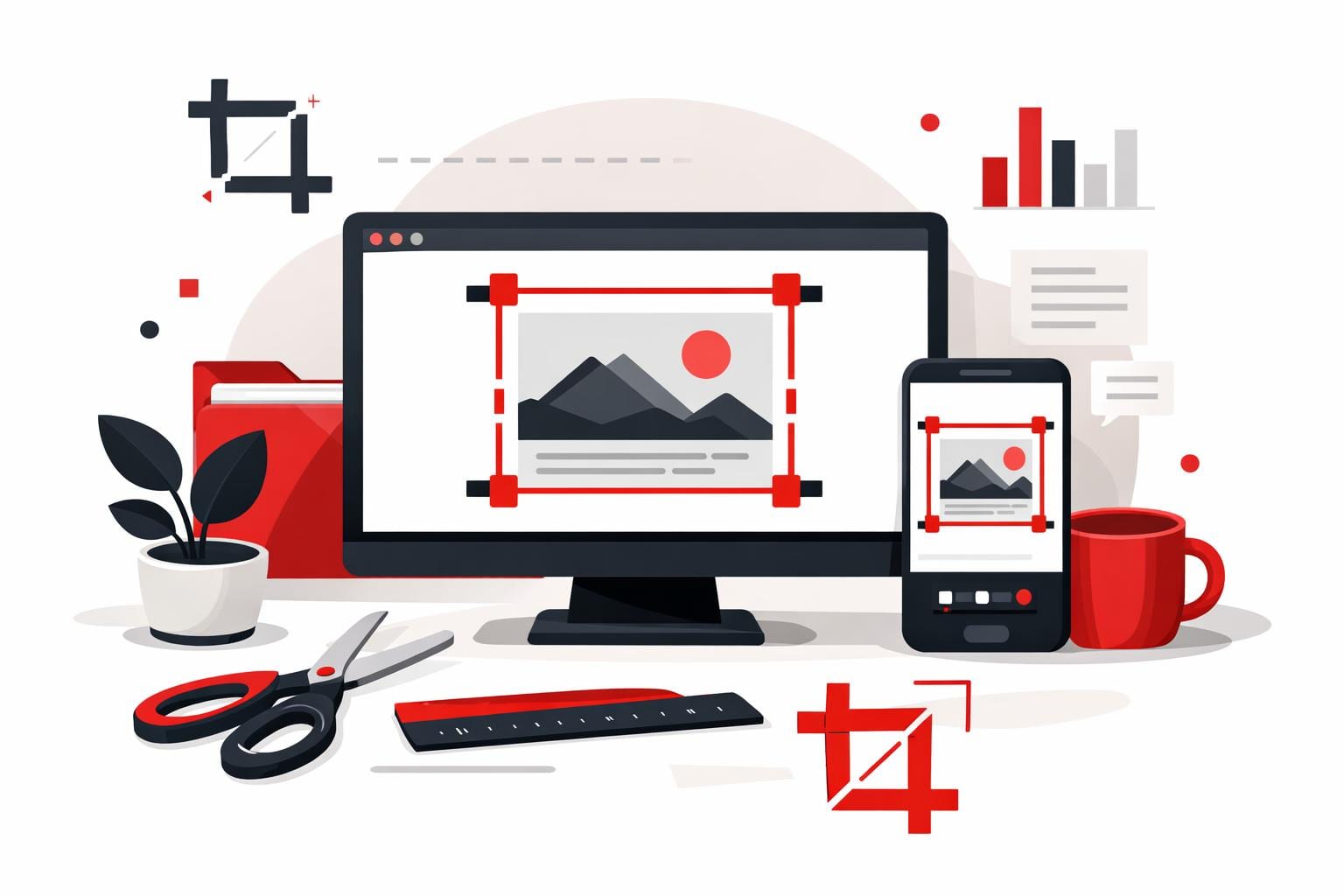
Cropping a PDF is the fastest way to remove oversized margins, scanner borders, and uneven framing so a document reads and prints cleanly. With the company’s Crop PDF tool, the job typically takes a minute, drag a box, choose whether to apply it to one page or all pages, then download the updated file.
Why cropping fixes messy PDFs
Most “messy PDF” complaints come down to framing, not content. Exports from slides, forms, and mixed-source merges often arrive with inconsistent whitespace, and scans frequently include shadows or dark edge artifacts.
- Sharper reading, less empty area means the eye lands on text and charts faster.
- Cleaner printing, better balance on the page can reduce awkward positioning and wasted paper.
- More professional sharing, clients and colleagues judge polish quickly, even for internal docs.
Mini model: the “3F test” helps decide the crop, Focus on the content, Fit for printing, Friction for sharing. If cropping improves at least two of the three, it is usually worth doing.
This guide reflects the tool behavior described on iLovePDF pages as of March 13, 2026.
What cropping really changes in a PDF
Cropping adjusts the visible page area, it is essentially a new window onto the same page. When the file is opened, viewers show only what fits inside that window.
That is why cropping is great for removing margins, but risky as a privacy shortcut. Hidden content can still exist in the file structure, so anything confidential near an edge should be handled with a true redaction workflow, not a tighter frame. For purpose-built removal, the company also offers a separate Redact PDF tool.
Decision rule: if the goal is layout, crop, if the goal is confidentiality, redact, and verify the output before sharing.
A quick browser workflow that actually works
The simplest flow is the web-based Crop PDF tool. It runs in the browser and is designed for quick one-off fixes as well as long documents, because the crop can be applied to a single page or across the entire file.
- Upload the PDF from a device or cloud source.
- Draw the crop by dragging a selection box over the area to keep.
- Set the scope, choose Current page when only one page is off, or All pages for consistent trimming.
- Process and review, check the result carefully, then download.
Practical example: a 40-page scanned lease often has dark scanner borders on only a few pages. Crop one representative page first, then use “All pages” only if the framing is consistent after checking several pages. If alignment varies, repeat with “Current page” for the outliers to avoid cutting initials or signatures.
How to avoid the classic overcrop mistake
The most common failure is cropping too aggressively. Text near the edge can look fine on screen, then get clipped by printing or by a different PDF viewer’s scaling settings.
- Keep a safety buffer, leave a thin margin around paragraphs, charts, stamps, and signatures.
- Spot-check multiple pages, scans and merged documents can drift a few pixels from page to page.
- Review with intent, if any personal data sits near the edge, confirm it is handled properly before distribution.
The Crop PDF interface itself warns users to review the final result before sending private information, a reminder worth treating as policy rather than suggestion.
When a different tool beats cropping
Cropping is a framing tool, not a general editor. It will not rewrite text, remove content from the document’s internals, reorder pages, or guarantee privacy compliance.
| Goal | Best approach | Why it fits | Helpful tool link |
|---|---|---|---|
| Make pages look cleaner | Crop | Removes distracting whitespace and scanner edges from view | Crop PDF |
| Remove sensitive details | Redact | Permanently removes selected text or graphics instead of hiding them | Redact PDF |
| Reduce attachment size | Compress after cropping | Cropping may not shrink file size much, compression targets images and structure | Compress PDF |
For readers who need a strict compliance-oriented redaction walkthrough beyond a specific tool, the U.S. courts publish practical guidance on doing redactions correctly, for example Redacting with Acrobat X.
After cropping, common follow-on steps include combining cleaned documents with Merge PDF, making scans searchable via OCR PDF, or checking changes with Compare PDF.
Security and pricing questions, answered
Is it safe to crop a PDF online? Safety depends on the platform and on disciplined review. According to the company’s Security and data protection information, uploads use HTTPS and processed files are automatically deleted within two hours, and the FAQ describes a similar two-hour retention window for downloads.
Can cropping be free? The cropper is publicly accessible and designed for browser-based use, although some platforms reserve advanced limits or batch capacity for paid tiers. When cost matters, the quickest check is whether the tool completes the job without requiring an account on the first run.
Will cropping reduce file size? Sometimes, but it is not reliable. If the document is heavy because of large embedded images, follow with compression using Compress PDF.
Can multiple pages be cropped at once? Yes, the cropper provides “Current page” and “All pages” modes, which is useful for long PDFs where consistency matters.
Will formatting change? The visible frame will, but the content is not rewritten like it would be in a document editor. That makes cropping safe for layout cleanup, but insufficient for text edits or guaranteed deletion.
For policy details beyond the summary, the company publishes a central hub for Legal and privacy information, including the Privacy Policy.