AI Chat & Independent PDF Tools Guide

iLovePDF pdf

  • Why iLovePDF Shows Page Not Found Messages

    Why iLovePDF Shows Page Not Found Messages

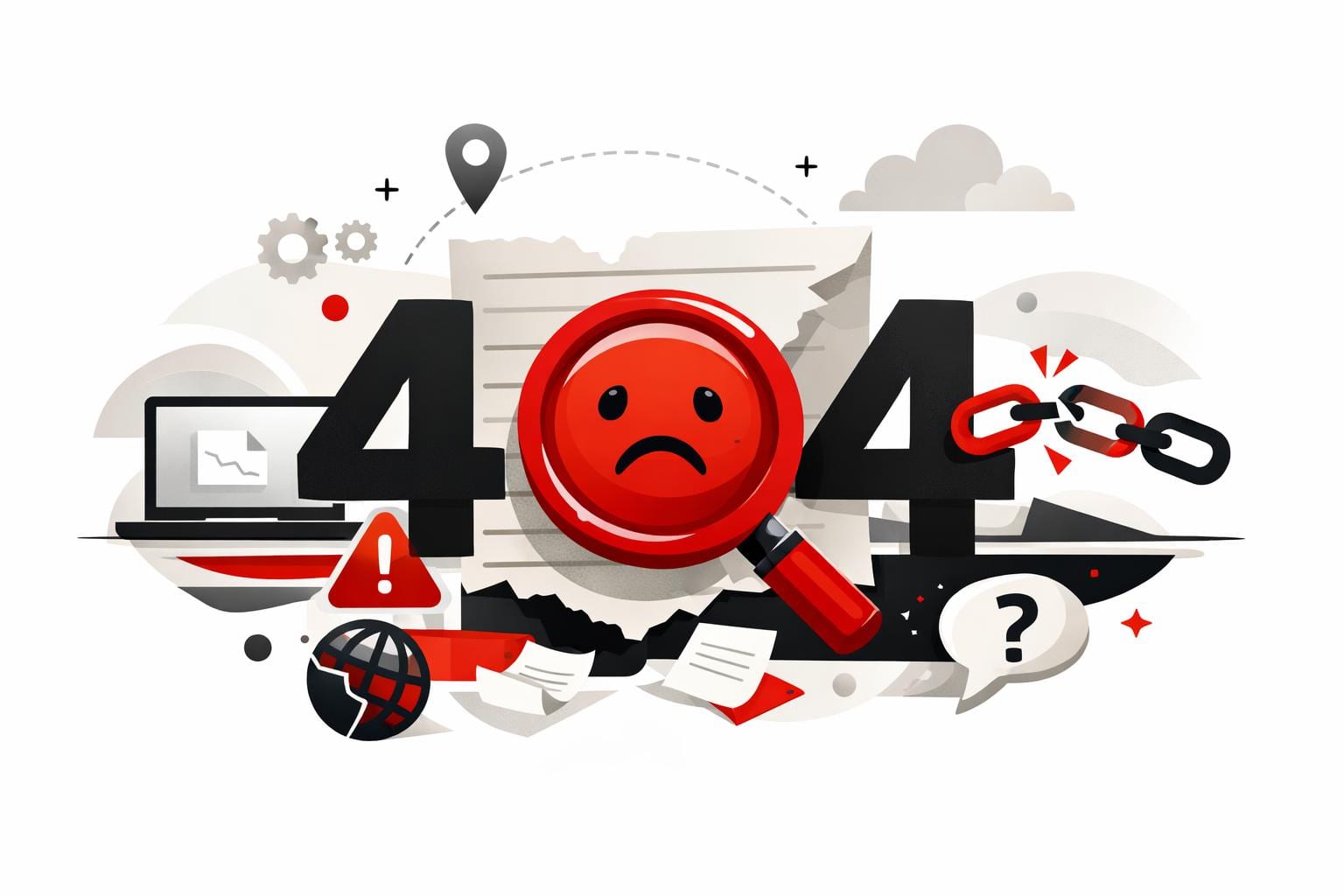
    This iLovePDF screen combines a basic “page not found” error with a cookie consent prompt. In plain terms, the link being opened does not resolve to a real page, and the site is asking permission to use personal data from the device for advertising, measurement, and product research, with controls available in its cookie settings.

    When a link fails, what it means

    A “page not found” message is a routing problem, the browser asked for a URL that the server cannot serve. The most common causes are a typo in the address, an outdated bookmark, or a link that was copied with missing characters.

    The same screen can also surface connectivity warnings. If the page hints at an internet connection issue, the URL might be correct but the session is failing due to a captive Wi Fi portal, a blocked script, a strict privacy extension, or a transient network error.

    Decision rule for fast troubleshooting

    If the address bar contains a long path or tracking parameters, first retry with the clean homepage link. If the homepage loads but the specific page does not, assume the URL is wrong or retired, then navigate from the tool index instead of guessing the path.

    Where to find the PDF features listed in the menu

    The navigation on the error screen is effectively a compact map of the product. It points to a browser based toolbox for common PDF jobs, plus separate desktop and mobile apps, and related services for images, e signing, and APIs.

    A quick market model to understand the stack

    The easiest way to categorize what is shown in that header and footer is a three lane model: Web utilities for fast one off tasks, client apps for repeat workflows and offline friendly use, and a developer platform for automation.

    • Web utilities, merge, split, compress, convert to and from Office and images, rotate pages, add watermarks, add page numbers, crop, repair, and OCR.
    • PDF security tools, unlock, protect, sign, redact, and compare.
    • Apps, dedicated downloads at Desktop and Mobile.
    • Related products, iLoveIMG, iLoveSign, and iLoveAPI.

    Concrete example that matches the menu

    Suppose a shared link to a specific tool page fails, but the goal is simply to reduce upload size for email. Open the homepage, select Compress PDF from the tool list, upload the file, then download the smaller version. This avoids relying on a brittle deep link.

    The consent message on the page draws a sharp line between file content and tracking data. It states that personal data, not the uploaded documents or account details, may be processed for ad personalization, performance measurement, audience research, and service development, and it highlights storage and access on the device through cookies and identifiers.

    The banner also signals scale and sharing: it references sharing with 141 TCF vendors and 63 advertising partners. It further notes that some parties may rely on legitimate interest, with the option to object via preference controls.

    Banner purpose What it typically involves Practical implication
    Personalised advertising and content Using identifiers and browsing signals to tailor ads or on site promotions More targeting, more data sharing across ad partners
    Advertising and content measurement Counting views, clicks, conversions, and attribution across sessions Better analytics, more persistent tracking across visits
    Audience research and services development Aggregated behavior analysis to improve features and UX Product improvement, but still a data collection channel
    Store and or access information on a device Cookies, unique identifiers, and device level signals Enables remembering settings, and can enable cross site tracking

    Two buttons usually frame the choice: a broad “accept all” path, and a “manage options” path that is slower but more precise. For readers who care about minimizing tracking, the second path is the meaningful one.

    How to manage consent and reduce tracking

    The screen points to cookie controls inside the help area. The most direct route is the cookies page, which sits under the legal and privacy hub at Legal and Privacy and Cookies.

    Practical steps that do not require guesswork

    • Adjust consent, use the manage options flow, then disable ad personalization first, before fine tuning measurement and research.
    • Revisit later, consent can be changed or withdrawn from the cookie page, not only at the moment the banner appears.
    • Check policies, review Privacy and Terms for the formal definitions behind the banner language.
    • Use a different execution mode for sensitive work, for documents that should avoid browser tracking surfaces, consider the desktop route at iLovePDF Desktop and review the security positioning at Security.

    For most users, the simplest privacy optimization is to reject ad personalization while keeping only what is needed for the site to function. The service remains usable, and tracking intensity typically drops without turning the session into a troubleshooting project.

    Finally, the footer indicates the brand and date context, including a 2026 copyright line and links to business and education paths. Those details matter because they hint at why consent banners are prominent, the product is monetized through a mix of subscriptions, business plans, and advertising supported free usage.
  • How to Crop PDFs Online Without Cutting Content

    How to Crop PDFs Online Without Cutting Content

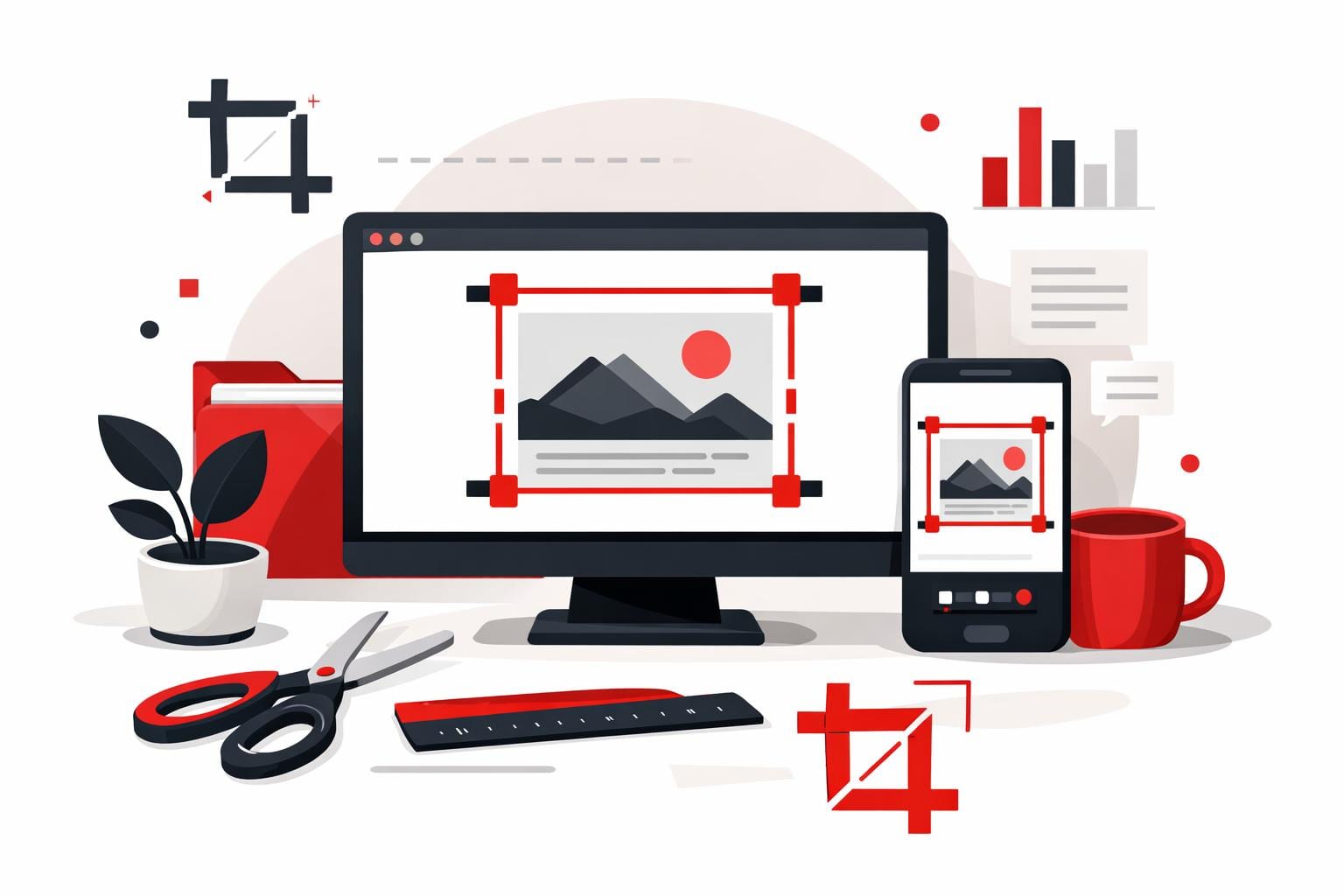
    Cropping a PDF is the fastest way to remove oversized margins, scanner borders, and uneven framing so a document reads and prints cleanly. With the company’s Crop PDF tool, the job typically takes a minute, drag a box, choose whether to apply it to one page or all pages, then download the updated file.

    Why cropping fixes messy PDFs

    Most “messy PDF” complaints come down to framing, not content. Exports from slides, forms, and mixed-source merges often arrive with inconsistent whitespace, and scans frequently include shadows or dark edge artifacts.

    • Sharper reading, less empty area means the eye lands on text and charts faster.
    • Cleaner printing, better balance on the page can reduce awkward positioning and wasted paper.
    • More professional sharing, clients and colleagues judge polish quickly, even for internal docs.

    Mini model: the “3F test” helps decide the crop, Focus on the content, Fit for printing, Friction for sharing. If cropping improves at least two of the three, it is usually worth doing.

    This guide reflects the tool behavior described on iLovePDF pages as of March 13, 2026.

    What cropping really changes in a PDF

    Cropping adjusts the visible page area, it is essentially a new window onto the same page. When the file is opened, viewers show only what fits inside that window.

    That is why cropping is great for removing margins, but risky as a privacy shortcut. Hidden content can still exist in the file structure, so anything confidential near an edge should be handled with a true redaction workflow, not a tighter frame. For purpose-built removal, the company also offers a separate Redact PDF tool.

    Decision rule: if the goal is layout, crop, if the goal is confidentiality, redact, and verify the output before sharing.

    A quick browser workflow that actually works

    The simplest flow is the web-based Crop PDF tool. It runs in the browser and is designed for quick one-off fixes as well as long documents, because the crop can be applied to a single page or across the entire file.

    • Upload the PDF from a device or cloud source.
    • Draw the crop by dragging a selection box over the area to keep.
    • Set the scope, choose Current page when only one page is off, or All pages for consistent trimming.
    • Process and review, check the result carefully, then download.

    Practical example: a 40-page scanned lease often has dark scanner borders on only a few pages. Crop one representative page first, then use “All pages” only if the framing is consistent after checking several pages. If alignment varies, repeat with “Current page” for the outliers to avoid cutting initials or signatures.

    How to avoid the classic overcrop mistake

    The most common failure is cropping too aggressively. Text near the edge can look fine on screen, then get clipped by printing or by a different PDF viewer’s scaling settings.

    • Keep a safety buffer, leave a thin margin around paragraphs, charts, stamps, and signatures.
    • Spot-check multiple pages, scans and merged documents can drift a few pixels from page to page.
    • Review with intent, if any personal data sits near the edge, confirm it is handled properly before distribution.

    The Crop PDF interface itself warns users to review the final result before sending private information, a reminder worth treating as policy rather than suggestion.

    When a different tool beats cropping

    Cropping is a framing tool, not a general editor. It will not rewrite text, remove content from the document’s internals, reorder pages, or guarantee privacy compliance.

    Goal Best approach Why it fits Helpful tool link
    Make pages look cleaner Crop Removes distracting whitespace and scanner edges from view Crop PDF
    Remove sensitive details Redact Permanently removes selected text or graphics instead of hiding them Redact PDF
    Reduce attachment size Compress after cropping Cropping may not shrink file size much, compression targets images and structure Compress PDF

    For readers who need a strict compliance-oriented redaction walkthrough beyond a specific tool, the U.S. courts publish practical guidance on doing redactions correctly, for example Redacting with Acrobat X.

    After cropping, common follow-on steps include combining cleaned documents with Merge PDF, making scans searchable via OCR PDF, or checking changes with Compare PDF.

    Security and pricing questions, answered

    Is it safe to crop a PDF online? Safety depends on the platform and on disciplined review. According to the company’s Security and data protection information, uploads use HTTPS and processed files are automatically deleted within two hours, and the FAQ describes a similar two-hour retention window for downloads.

    Can cropping be free? The cropper is publicly accessible and designed for browser-based use, although some platforms reserve advanced limits or batch capacity for paid tiers. When cost matters, the quickest check is whether the tool completes the job without requiring an account on the first run.

    Will cropping reduce file size? Sometimes, but it is not reliable. If the document is heavy because of large embedded images, follow with compression using Compress PDF.

    Can multiple pages be cropped at once? Yes, the cropper provides “Current page” and “All pages” modes, which is useful for long PDFs where consistency matters.

    Will formatting change? The visible frame will, but the content is not rewritten like it would be in a document editor. That makes cropping safe for layout cleanup, but insufficient for text edits or guaranteed deletion.

    For policy details beyond the summary, the company publishes a central hub for Legal and privacy information, including the Privacy Policy.

  • Regional PDF Processing Puts Data Location First

    Regional PDF Processing Puts Data Location First

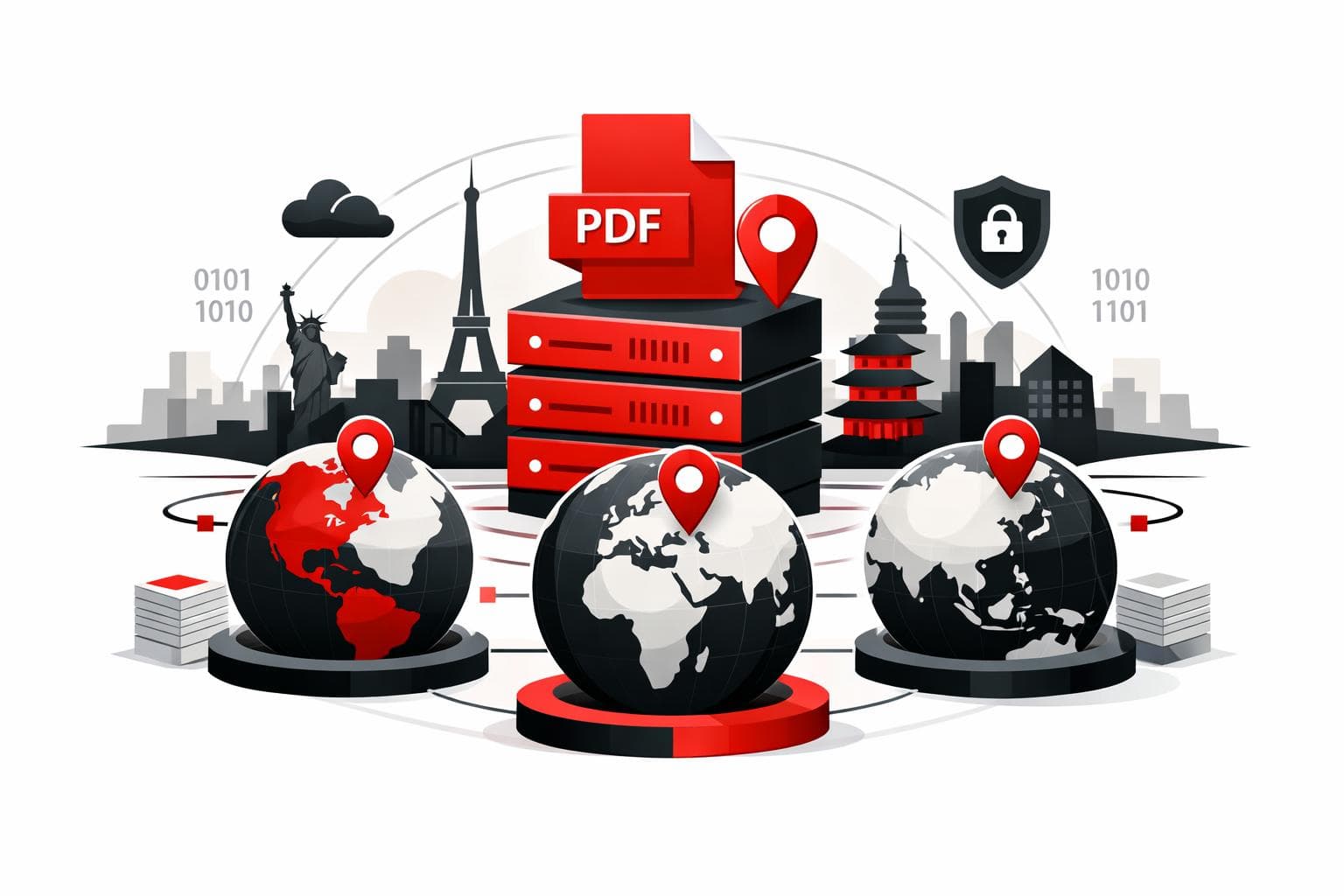
    iLovePDF’s Regional File Processing adds a practical control knob, choosing the country or region where PDF jobs run, instead of leaving routing decisions to the vendor. The goal is simpler compliance conversations, faster turnaround for distributed teams, and clearer answers during security reviews. According to iLovePDF, files are automatically deleted within two hours after processing.

    The new geography of PDF processing

    Online PDF tools used to feel locationless, a file went in, a file came out. In 2026, that illusion breaks quickly once legal teams, customers, or regulators ask where documents are handled.

    According to iLovePDF’s product announcement, Regional File Processing is designed to let account holders select the processing jurisdiction directly, which turns a vague vendor answer into a setting that can be documented.

    A three factor lens for modern document tools

    Location matters because it touches three pressures at the same time.

    • Law, the rules that govern cross border data handling.

    • Latency, the delay added by distance and network hops.

    • Trust, the ability to answer buyer questions without hand waving.

    What stakeholders ask If the vendor routes globally by default With a chosen processing region
    Which jurisdiction covers processing? The answer may depend on routing and sub processor choices at runtime. A specific region can be selected and referenced in internal controls.
    Will performance hold under batch workloads? Long distances can slow uploads, downloads, and repeated API style requests. Processing closer to the team typically reduces delays and improves responsiveness.
    Are files retained after the job completes? Retention policies vary widely and are often buried in help pages. iLovePDF states files are deleted automatically within two hours, with additional controls described in its security documentation.

    Compliance answers that auditors accept

    Data residency is the requirement to keep data inside a defined jurisdiction, usually because contracts, regulations, or internal policy demand it. Regional processing is not a legal shortcut, but it helps align operational reality with policy language.

    Why this is showing up in vendor questionnaires

    The same set of questions keeps reappearing across industries, where is the document processed, which legal framework applies, and what prevents unnecessary cross border exposure. iLovePDF frames the feature as a way to support obligations tied to frameworks such as GDPR in Europe, PDPL in parts of the Middle East, and APPI in Japan.

    Documentation that matters in procurement

    Two pages tend to carry the most weight in reviews. The first is security controls, the second is the data processing agreement.

    For teams that need proof of a formal security management system, iLovePDF also publishes an ISO/IEC 27001 certificate.

    Where speed gains actually come from

    Compliance is often the headline, but distance is the quiet tax. Every upload, conversion step, and download is sensitive to round trip time, and high volume workflows amplify small delays.

    A concrete example from a legal workflow

    iLovePDF describes a legal operations team in Mumbai processing around 300 contracts per week, with typical files in the 12 MB to 20 MB range. When jobs are routed through a far away region, the experience becomes less responsive, especially during batch operations.

    Even modest latency improvements, such as 40 ms to 100 ms per request, can add up across hundreds of documents and multiple steps per document.

    Workloads that feel the difference most

    • Merging and splitting large sets of PDFs.

    • Compression runs on heavy reports and image rich files.

    • Archival conversions, especially when converting to PDF/A.

    • OCR on scanned documents, which is compute intensive and sensitive to throughput limits.

    For OCR heavy environments, an explainer like iLovePDF’s OCR overview helps set expectations, OCR adds a text layer by analyzing page images, which naturally costs more time than basic reorganizing or merging.

    What buyers want to hear in procurement

    Regional selection is ultimately a transparency feature. It replaces a hand waved “it depends” with a selectable setting and a short, repeatable story security teams can validate.

    What iLovePDF says happens to files

    According to iLovePDF, documents are not stored permanently, and files processed on the platform are deleted automatically within two hours. The security page also mentions an option to manually delete files from the download screen. Details are described in the company’s security documentation.

    One nuance matters for e signature workflows. The same security documentation states that signed documents can be retained for up to five years to meet legal requirements, which is a different lifecycle from standard conversion jobs.

    Redaction still matters before anything crosses a border

    Regional processing reduces cross border exposure, but it does not reduce the sensitivity of what is inside the document. When sharing outside the organization, the safest move is often removing sensitive fields first with true redaction, not visual covering. A walkthrough is available in iLovePDF’s redaction guide.

    Which teams benefit most

    Regional processing is most valuable where document handling is frequent, regulated, or externally scrutinized.

    • Legal and compliance, contracts, NDAs, HR files, and regulated records often come with residency requirements.

    • Finance, invoices, audits, and statements attract tighter controls and formal vendor reviews.

    • Multinational teams, distributed offices benefit when each site runs jobs in a nearby region under an approved jurisdiction.

    • Security focused professionals, even occasional processing becomes easier to justify when location and retention are clear.

    How to choose the right region fast

    Regional File Processing is set in account profile settings, and iLovePDF notes that workspace owners can influence how teams process files.

    A clear decision rule

    • If policy or contract language requires a specific jurisdiction, choose that jurisdiction first, then validate it against the organization’s legal guidance.

    • If there is flexibility, choose the closest region to the highest volume users, then measure time saved on a representative weekly batch.

    Workflow coverage and one important exception

    iLovePDF positions the setting as applicable across most tools, including merge, compression, Office conversions, split workflows, and e sign processes. The product announcement notes that Smart Split is processed in Europe, even when other tools follow the selected region.

    For structured archiving, pairing regional control with PDF/A conversion can tighten governance by design. The conversion tool is available at PDF to PDF/A.

    Quick answers for security questionnaires

    Does selecting a region keep files stored there?

    iLovePDF describes regional selection as a processing location choice, not a storage commitment. The company states that files are deleted automatically within two hours after processing, and that users can manually delete files from the download screen.

    Can different teams run different regions?

    iLovePDF indicates that regional preferences can apply at the workspace level, which supports different jurisdictions for different offices or business units.

    Is security weaker in some regions?

    iLovePDF states that regions follow ISO/IEC 27001 aligned practices, and publishes security details and an ISO certificate through its documentation.

    Will the speed difference be noticeable?

    The impact is largest when the current processing location is far from the team, or when work involves large files, OCR, or repeated batch conversions where small delays compound.

  • Free Ways to Convert PDF into Word

    Free Ways to Convert PDF into Word

    To turn a PDF into an editable Word file for free, use an online converter for quick changes, or a desktop app when the file should stay on the computer. If the PDF is a scan, OCR is needed to convert the picture of text into real, editable characters, and that step is often a paid add on.

    Choosing a conversion route that fits

    A PDF is designed to display consistently, a Word document is designed to be edited. Converting between the two is a reconstruction job, which means results depend on how the PDF was created and how complex the layout is.

    • Text-based PDF, text can be selected with a cursor, standard conversion usually works well.
    • Scanned PDF, text behaves like an image, OCR is required to make it editable.
    • Layout-heavy PDF, lots of columns, tables, or positioned elements, expect cleanup in Word after conversion.

    Decision rule, if the text in the PDF cannot be highlighted and copied, plan on OCR. If the file contains sensitive information and uploading is not acceptable, prefer an offline workflow.

    Approach Best at Typical tradeoff
    Web converter Quick, single file conversions from a browser, including imports from cloud storage Requires uploading the document
    Desktop converter Keeping processing on the local machine, useful on restricted networks Needs installation and local setup
    OCR mode Making scanned pages editable by detecting characters from images Accuracy depends on scan quality and may require a Premium plan

    For comparison, Microsoft Word itself can also open many PDFs and attempt a conversion, which is convenient when Word is already available, but complex formatting can shift. See Microsoft’s guidance on opening PDFs in Word.

    The fastest online conversion workflow

    The browser option is built for speed, open the converter, upload a file, convert, download. iLovePDF offers a dedicated page for this workflow at PDF to Word.

    Online steps that stay simple

    • Open the PDF to Word tool in a browser.
    • Select a PDF from the device, or import from Google Drive or Dropbox.
    • If the file is not scanned, keep OCR off and proceed with the standard conversion.
    • Run the conversion, then download the .DOCX file or save it back to cloud storage.

    For text-first documents such as contracts, reports, and policies, conversion typically preserves most of the structure, making small edits faster than retyping.

    Offline conversion when uploads are a problem

    Offline conversion is the practical choice when a document cannot leave the machine, or when the network is unreliable. iLovePDF provides this route through iLovePDF Desktop for Windows and macOS.

    Offline steps on desktop

    • Install iLovePDF Desktop on Windows or macOS.
    • Open the PDF from the app, or drag and drop it into the reader.
    • Choose the PDF to Word conversion tool, then start the conversion.
    • Open the output folder to access the converted Word document.

    According to iLovePDF, the desktop app is designed to offer the same toolbox as the web version, while processing files locally for privacy focused workflows.

    How to handle scanned PDFs with OCR

    OCR, short for Optical Character Recognition, detects letters inside an image and recreates them as selectable text. That is the difference between a Word file that can be edited normally and one that behaves like a pasted screenshot.

    When OCR is necessary

    • The PDF came from a scanner, fax, or a photo based workflow.
    • Words cannot be selected, copied, or searched in a PDF viewer.
    • The goal is real editing, not just copying small snippets.

    How OCR typically works in practice

    • In the web tool, scanned content triggers an OCR choice, OCR is labeled as a Premium option on the converter page.
    • On desktop, scanned pages can be detected and routed through OCR depending on the product and plan.

    Practical example, a scanned lease agreement needs an updated tenant name and a corrected date. Run OCR, convert to Word, make the two edits in seconds, then export back to PDF for sharing.

    OCR quality follows input quality. Sharp scans, clean contrast, and minimal handwriting improve results, while blurry photos and heavy markup increase the time spent fixing the output.

    What to expect on security and file deletion

    For any online conversion, the key question is what happens to the file after upload. According to iLovePDF’s Security and data protection documentation, files are protected with encryption, and processed files are automatically deleted within two hours, with an option for manual deletion from the download screen.

    Security posture still depends on context. For regulated data, internal policies usually matter more than tool features, so an offline workflow, or an approved enterprise converter, is often the safer decision even when the online option is technically secure.

  • Convert PDF Files to Word Without Retyping

    Convert PDF Files to Word Without Retyping

    To convert a PDF into an editable Word document, upload it to a converter, choose standard conversion for selectable text or OCR for scanned pages, then download the DOCX and edit it in Word. iLovePDF provides this workflow in the browser, plus desktop and mobile apps when a web tab is not the best place to process documents.

    Why PDFs resist edits in the first place

    PDF is designed to display consistently, not to behave like a living document. A typical PDF page is closer to a finished layout than a Word file, text can be positioned as individual blocks, and lines can be split in ways that make perfect visual sense while being awkward to edit.

    A PDF to Word converter rebuilds that layout into paragraphs, tables, and images that Word understands. The goal is practical editing, not pixel perfect reconstruction, so complex pages with columns, footnotes, and mixed fonts require a better conversion engine and cleaner input.

    How to tell when OCR is necessary

    The fastest way to pick the right conversion mode is to test the PDF, not to guess. Open the file in any PDF viewer and try to highlight a sentence.

    • Decision rule If text highlights cleanly, use standard conversion, if the page behaves like a single image, use OCR.

    OCR, short for Optical Character Recognition, turns text inside images into machine readable characters, so the result can be searched and edited. A plain language overview is available at Optical character recognition.

    iLovePDF surfaces this choice directly inside its PDF to WORD tool, offering a non OCR option for selectable text and an OCR option marked as Premium for scanned pages, and the page notes that the converter is powered by Solid Documents.

    Conversion route Best fit Scanned pages Internet required Typical plan
    Web standard Digital PDFs with selectable text No Yes Often available on free tiers with limits
    Web with OCR Scans, photos, non selectable text Yes Yes Usually a paid feature
    Desktop app Large files, restricted networks, privacy focused workflows Depends on feature access No for offline processing Free reader, paid tools optional
    Mobile app Quick conversions, signing, and document chores on a phone Depends on feature access Often yes App plus subscription options

    A simple mental model helps keep choices consistent across tools. Use the SFP checklist, source type, formatting sensitivity, and privacy needs, then pick the route that optimizes the constraint that matters most.

    A quick web conversion that keeps structure

    For most people, browser conversion is the shortest path from locked PDF to editable DOCX. The iLovePDF flow is built around one action, upload, convert, download, with optional cloud imports.

    Standard conversion for selectable text

    • Open the PDF to WORD tool.
    • Upload a file, drag and drop works, and the tool also supports importing from Google Drive and Dropbox.
    • Leave the mode set to non OCR conversion.
    • Run the conversion and download the resulting Word file.

    OCR conversion for scanned PDFs

    • Upload the PDF as usual.
    • Switch the conversion mode to OCR if the tool flags scanned pages.
    • Convert, then open the DOCX in Word and proofread key fields like names, dates, and amounts.

    The practical payoff is not just editability. A good converter also preserves enough of the original layout to avoid rebuilding headings, spacing, and inline images by hand.

    How to get readable results from scans

    OCR is only as good as the pixels it receives. If the scan is fuzzy, skewed, or covered with handwriting, the converter must guess, and guesses show up as misspellings, broken words, and strange spacing.

    • Keep scans sharp High contrast pages with straight lines produce cleaner text.
    • Reduce visual noise Stamps, scribbles, and heavy highlights can be mistaken for characters.
    • Set the right languages iLovePDF’s OCR PDF tool notes that selecting the document language improves detection accuracy.

    Concrete example A property manager receives a scanned lease agreement that needs a corrected tenant name and an updated address. Running OCR conversion first turns the scan into editable text, then Word can be used to update the fields and send an updated DOCX to legal for review instead of retyping the entire contract.

    When desktop and mobile beat the browser

    Browser tools are convenient, but they are not always the best fit for heavy, repetitive, or connectivity constrained work. That is where installed apps matter.

    The iLovePDF Desktop app is positioned for offline processing and local handling of files, which helps when internet access is unreliable or when documents are too large to comfortably manage in a single web session. It also centralizes bulk style work, like running the same operation across many files.

    The iLovePDF Mobile app targets the opposite scenario, quick turnaround on a phone or tablet. It bundles common document tasks, including conversions and signing, for people who need to move paperwork forward away from a computer.

    Limits, plans, and what happens to files

    Most online converters separate light use from high volume use. iLovePDF’s pricing page describes a free Basic tier with limited processing, and paid plans that expand access across web, mobile, and desktop, plus higher capacity and Premium only features such as OCR where indicated by the tool.

    File safety is the other half of the decision, especially for contracts, HR documents, and financial records. According to iLovePDF’s Security and Data Protection documentation, files are encrypted during processing, and processed files are automatically deleted within two hours, with additional controls such as manual deletion and optional account protections like two factor authentication.

    For sensitive work, the safest habit is procedural. Convert only what needs editing, remove personal identifiers when possible, and prefer offline processing routes when policy requires keeping documents on a local machine.

    Fast answers to common conversion questions

    • Why convert to Word at all Word is built for editing, PDFs are built for stable sharing, conversion bridges that gap for resumes, reports, and forms.
    • Will the layout match perfectly Simple PDFs convert cleanly, dense layouts may need light touch up in Word, especially around columns and tables.
    • Can scanned PDFs become editable Yes, but only with OCR, which turns the scan into text, then the result should be proofread.
    • How to convert multiple files faster Look for bulk or batch workflows in paid plans, and use the desktop app when many documents must be processed consistently.
    • Can the same tool work on a phone Yes, iLovePDF offers a mobile app for iOS and Android.
    • How to keep accuracy high Use the decision rule, choose OCR only for scans, and set the correct language when OCR is involved.
  • Convert PDFs to Office Files Without Losing Layout

    Convert PDFs to Office Files Without Losing Layout

    To edit a PDF, the fastest path is usually conversion into an Office file, Word for text edits, Excel for tables, or PowerPoint for slides, then finishing the job in the app that matches the content. iLovePDF provides that conversion in three routes, web, desktop, and mobile, with Premium options such as batch processing and OCR for scanned pages.

    Why PDFs resist clean edits

    A PDF is built to preserve a page exactly as it looks, not to preserve the underlying structure that editors rely on. That difference matters because Word and Excel expect reusable building blocks such as paragraphs, headings, rows, and cells, while many PDFs only contain positioned text and graphics.

    Conversion tools try to reconstruct that structure from visual layout. Results depend on how the PDF was created, a digitally generated PDF with selectable text typically converts better than a scanned document that is basically an image.

    A three step web conversion routine

    For quick edits, a browser converter is often the most convenient option, no installation, no admin rights, and no waiting. iLovePDF’s online PDF to Office tools accept drag and drop uploads, and also support importing files from cloud storage such as Google Drive and Dropbox.

    Quick workflow

    According to iLovePDF, its PDF to Word, PDF to Excel, and PDF to PowerPoint converters are powered by Solid Documents. The tool pages list Solid Documents as the conversion engine behind these exports.

    Option What it optimizes for Best fit Internet needed
    Web tools Speed and convenience Occasional conversions and fast edits Yes
    Desktop app Local processing and offline work Confidential files, restricted networks, high volume No for core conversions
    Mobile app Capture, annotate, sign, and share Field work, quick approvals, lightweight edits Often, especially for conversions

    A practical decision model that holds up in real teams is the RVM test, risk, volume, mobility. It forces the right tool choice before anyone uploads sensitive material just because it is faster.

    • Risk, if the document is sensitive, prefer the desktop route that processes files locally.
    • Volume, if many PDFs must be converted in one run, look for batch processing, iLovePDF positions this as a Premium capability on its conversion guide and pricing page.
    • Mobility, if the work happens in hallways, on job sites, or between meetings, the mobile workflow typically wins.

    For Premium features such as OCR and batch processing, iLovePDF publishes plan details on its pricing page.

    How to pick the right Office output

    Choosing the output format is not a cosmetic choice, it determines how much cleanup happens after conversion. A useful rule is to convert into the format that matches the document’s dominant structure, prose goes to Word, grids go to Excel, and page designed visuals go to PowerPoint.

    Word for edits and rewrites

    PDF to Word is the default when the goal is rewriting text, deleting sections, or adding new paragraphs while keeping a familiar page layout. If the PDF contains scanned pages, the tool indicates that OCR is required to extract editable text, and OCR is positioned as a Premium option.

    Excel for tables and numbers

    PDF to Excel is the right call when the value is in rows and columns, such as invoices, statements, or price lists. The converter offers layout choices, including placing content into one sheet or splitting it across multiple sheets, which can reduce manual rearranging after export.

    PowerPoint for decks and visuals

    PDF to PowerPoint is best when the PDF is already presentation shaped, and the goal is to reuse charts, tables, and images in an editable deck. It is often faster than rebuilding slides from scratch, especially when visual elements must stay aligned.

    Concrete example, a finance analyst receives a monthly vendor summary as a PDF. The tables go through PDF to Excel for analysis, key charts then move into PowerPoint for a leadership update, and the narrative section converts to Word for revision.

    A simple decision rule avoids most conversion frustration: if text can be highlighted and copied in the PDF viewer, standard conversion is usually enough, if it cannot, OCR is needed to turn image based text into editable content.

    When local conversion is the safer bet

    Teams dealing with regulated data, client contracts, or internal HR files often hit a policy wall with browser uploads. iLovePDF addresses that use case with iLovePDF Desktop, positioned as a Windows and Mac app that can run heavy PDF tasks offline while keeping processing on the local machine.

    This route is also a practical choice in low connectivity environments, such as travel, job sites, or segmented corporate networks. It reduces the operational friction of cloud workflows without changing the basic idea, convert the PDF into an Office file, then edit in Office.

    What a phone workflow is actually good at

    A mobile converter is not just a smaller version of a web tool. The iLovePDF Mobile page positions the app around scanning, annotations, signing, and file organization, the tasks that happen when a laptop is not available.

    It is especially useful for fast turnaround work, compressing a PDF for sending, adding markup during review, signing on the spot, or digitizing paperwork into PDFs. Conversion to Office can fit into that flow when edits are needed immediately and the source document is already on the device.

    A quick safety check before uploading files

    Online conversion is convenient, but it is still a data handling decision. iLovePDF’s own security and data protection page describes end to end encryption for files during processing, and states that files are automatically deleted within two hours after being processed.

    For organizations with strict rules, the cleanest policy is binary: if the document contains regulated or highly confidential content, use local processing with the desktop app, otherwise a web converter is acceptable for speed. That rule is easy to enforce, and easy to audit.

    For additional context on the full PDF to Office workflow described by the company, the iLovePDF guide How to convert PDF to Office summarizes the web, desktop, and mobile options in one place.

  • Convert PDFs Cleanly Across Devices

    Convert PDFs Cleanly Across Devices

    Reliable PDF conversion comes down to one choice, whether the PDF is a final deliverable meant to look identical everywhere, or a source file that needs editing. iLovePDF groups web, mobile, and desktop tools to convert between PDF, Office files, images, web pages, and archival PDF/A, with OCR available when the file is a scan.

    Start by deciding what the PDF should become

    PDF is designed for visual consistency, not day to day editing. That is why conversions work best when the next step is clear, either distribute a document that must keep its layout, or move content back into an editable format like Word, Excel, or PowerPoint.

    Decision rule If the file will be edited again this week, convert out of PDF, if it will be reviewed, signed, uploaded, or archived, convert into PDF and keep it there.

    • Fidelity Keep the page looking identical, prioritize PDF, PDF/A, and image exports.
    • Flexibility Make text and tables editable, prioritize Word, Excel, PowerPoint, and OCR for scans.
    • Future proofing Preserve documents for years, prioritize PDF/A with the required conformance level.

    Most converters on iLovePDF follow the same rhythm, open the tool, upload from local storage or connected cloud drives, pick the relevant options, convert, then download the result. The main difference is the one setting that decides quality, such as OCR on scanned PDFs, or page size and margins for image to PDF.

    What needs to happen next Best fit tool Setting that matters most What it optimizes for
    Send a document that must look the same everywhere Word to PDF, Excel to PDF, PowerPoint to PDF Batch selection and final review Layout stability across devices
    Edit text that arrived as a PDF PDF to Word OCR on scans Editable paragraphs with fewer retypes
    Reuse a PDF as a slide deck PDF to PowerPoint Slide structure check Fast draft presentations from existing pages
    Analyze numbers locked in a report PDF to Excel OCR if tables are images Structured data that can be filtered and charted
    Post or reuse pages as images PDF to JPG Page export versus image extraction Shareable visuals and asset reuse
    Meet archiving or compliance requirements PDF to PDF/A PDF/A conformance level Long term readability and preservation

    Turn images into PDFs and PDFs into images

    Image conversions are ideal when the raw material is visual, scans, photos, screenshots, or hand marked pages. Converting images into a PDF also makes it easier to store a set of files as one document, and to annotate, search, and share in a consistent container.

    Convert images to a single PDF

    The JPG to PDF tool also accepts common image formats, including PNG, TIFF, SVG, BMP, HEIC, RAW, and WEBP. After upload, set page orientation, choose page size, and decide whether margins should frame the image or let it fill the page.

    Convert a PDF into JPG files

    Use PDF to JPG when a PDF needs to become shareable visuals, such as a quick carousel draft, a handout turned into slide images, or a set of pages for design markup. The key fork is whether every page becomes a JPG, or only embedded images should be extracted as separate files.

    Move between PDF and Office without chaos

    Office conversions are where quality expectations are highest, because people want to edit without rebuilding the document. The practical goal is not perfect magic, it is preserving enough structure that edits start immediately, not after an hour of cleanup.

    PDF to Word for real edits

    PDF to Word is the default path when the PDF contains paragraphs, headings, and placed images that need revisions. For scanned documents, OCR turns an image of text into selectable text, a short explanation is available in iLovePDF’s What is OCR guide.

    Word to PDF for locked down sharing

    Word to PDF is best when the document has to open reliably for someone who may not have the same version of Word. It also supports multiple Word formats, including DOC, DOCX, ODT, STW, SDW, and SXW.

    PDF to PowerPoint and back

    PDF to PowerPoint turns pages into an editable slide structure, useful for reusing reports and handouts in presentations. When the deck is ready for distribution, PowerPoint to PDF keeps fonts and layout stable for classmates, colleagues, and clients.

    PDF to Excel for analysis

    PDF to Excel is the fastest way to stop manually recreating tables. If the document is a scan, OCR helps reconstruct text and tables so the result behaves like a spreadsheet, not a pasted image.

    Practical example When a proposal arrives as a PDF but needs edits, convert it with PDF to Word, revise in Word, convert back using Word to PDF, then combine the final proposal with supporting documents using Merge PDF.

    Capture web pages and archive to PDF A

    Two conversions focus on time, not convenience. One freezes the web page as evidence or reading material, the other makes a document safer for long term storage.

    HTML to PDF for web capture

    HTML to PDF creates a PDF snapshot of a web page that may change, disappear, or load differently on other devices. Formatting controls typically include screen size, page size, orientation, margins, and ad blocking, and a preview helps catch layout issues before export.

    PDF to PDF/A for long term preservation

    PDF to PDF/A converts a standard PDF into an ISO standardized archival variant. The essential choice is the conformance level requested by a policy, client, or agency, because different levels enforce different rules around fonts, metadata, tagging, and embedded content.

    For a deeper explanation of the PDF/A variants, iLovePDF also publishes Meet the PDF/A family.

    Choose web mobile or desktop for the same job

    iLovePDF runs conversions in three places, the browser, the mobile app, and a desktop app. The best option depends on speed needs, whether work happens on the move, and how sensitive the document is.

    Web tools for quick one off conversions

    The web interface is the fastest start for most conversions, especially when files are already in cloud storage. Common tasks like Compress PDF, Organize PDF, and Edit PDF fit naturally after a conversion.

    Mobile for scanning and on the move fixes

    The iLovePDF Mobile app is built for iOS and Android workflows, such as turning a photo into a PDF, converting a file before an upload deadline, or signing a document away from a laptop. The iOS listing is available on the App Store.

    Desktop for offline work and local processing

    iLovePDF Desktop targets heavier tasks and offline workflows. According to iLovePDF, desktop processing can keep files on the computer rather than relying on a browser session, which can matter for privacy constrained environments.

    For web processing, iLovePDF describes its file handling and retention approach on its Security and data protection page.

    A quick checklist before sending the file

    Conversions succeed when the output matches the next action, not when the file simply opens. A short review prevents the most common errors, especially in PDFs converted back into editable Office formats.

    • Text test Confirm text is selectable, if not, rerun using OCR where available.
    • Table test In Excel exports, verify columns did not shift, and totals still align.
    • Page test Check orientation, margins, and page order, then fix with Organize PDF if needed.
    • Size test If upload limits are tight, use Compress PDF and recheck legibility.
    • Trust test If the PDF is the final deliverable, consider locking the workflow with a password via Protect PDF or collecting signatures via Sign PDF.

    With the direction decided and the right single setting selected, most PDF conversions become repeatable, predictable, and fast.

  • Office Documents Turn Into PDFs Without Surprises

    Office Documents Turn Into PDFs Without Surprises

    Converting Word, Excel, and PowerPoint files to PDF is the fastest way to lock in layout, share a document across devices, and reduce “it looks different on my screen” problems. When built in export is unavailable or batch work matters, online converters like iLovePDF can turn Office files into PDFs in minutes.

    Why PDFs travel better than Office files

    A PDF acts like a sealed container for page layout. Fonts, spacing, and graphics are far less likely to shift when the file opens on Windows, macOS, iOS, or Android, even when the recipient does not have Microsoft Office installed.

    PDF also supports more than static text. It can keep links, embed media, and carry attachments in a way that stays consistent across many viewers, which makes it a practical delivery format for reports, slide decks, and forms.

    A useful mental model is the PDF Triad:

    • Reach, the file opens nearly everywhere with predictable rendering.
    • Fidelity, the page looks like the author intended, not like the receiver’s default settings.
    • Control, it is harder to alter accidentally, and protection tools can restrict access.

    One concrete example: a sales team exports a pricing proposal from Excel to PDF before emailing it, so formulas stay hidden, column widths do not collapse, and the customer sees a clean, printable page.

    Pick the right conversion method fast

    Office apps can often export to PDF directly. Online conversion becomes valuable when a device lacks Office, when multiple files need processing, or when a consistent conversion workflow is required across a team.

    Decision rule: if the recipient needs to edit the content, send the original Office file. If the recipient needs a final, reliable, view only version, send a PDF.

    Office file What usually breaks in PDF exports Best pre flight check What to verify after conversion
    Word Missing fonts, shifted line wraps, headers and footers drifting Accept track changes, check margins, confirm embedded images Page count, headings, tables, and hyperlink targets
    Excel Columns cut off, tiny text, awkward page breaks Set print area, choose scaling, preview pages All columns visible, totals on the right page, readable chart labels
    PowerPoint Animations vanish, speaker notes omitted, slide content clipped Confirm slide size, simplify dense slides, test links Each slide fits, links work, visual hierarchy still holds

    How to convert Word Excel and PowerPoint online

    iLovePDF provides dedicated converters for common Office formats. The browser flow stays largely the same across tools: upload, convert, download, then spot check the output.

    Word to PDF for documents that must not reflow

    Use the Word to PDF tool for DOC and DOCX files when the priority is preserving typography and page layout. After conversion, scan for shifted tables, missing fonts, and unexpected extra pages.

    • Open the converter page, then select or drag in the Word file.
    • Start the conversion, then download the PDF.
    • If the document uses links, click a few in the PDF to confirm they survived the export.

    Excel to PDF for spreadsheets that must print cleanly

    Use the Excel to PDF tool when a spreadsheet needs to read well on any device. Excel documents often require extra care because PDFs are page based, while spreadsheets are grid based.

    • Before uploading, set a sensible print area and scaling inside Excel.
    • Convert the XLS or XLSX file, then download the PDF.
    • Verify page breaks, column visibility, and chart readability.

    PowerPoint to PDF for slide decks that must open anywhere

    Use the PowerPoint to PDF tool for PPT and PPTX files when the goal is predictable viewing on laptops and phones. Expect animations and transitions to become static slides, that tradeoff is usually worth it for client sharing.

    • Upload the presentation, run the conversion, then download.
    • Check slide edges for clipped text and cropped images.
    • Test any hyperlinks that matter, especially in agenda slides.

    iLovePDF’s conversion pages also show options to pull files from cloud storage services like Google Drive and Dropbox, which can speed up workflows when documents live in shared folders.

    For higher volume work, the pricing page lists plan limits. The page indicates a free tier with smaller file size allowances for Office conversions and paid plans that add batch processing, up to 10 files per task, plus larger per task size limits, shown as up to 4 GB for Office to PDF tools.

    When mobile and desktop tools win

    Mobile conversion matters when the document starts on a phone, for example a photographed contract or a quick edit on a tablet. The company’s mobile app page highlights scanning, editing, signing, and converting workflows built for iOS and Android.

    Offline processing matters when bandwidth is unreliable or when documents should not leave a device. The desktop app is positioned as a way to run many of the same tools locally, and it also references PDF/A support for long term archiving, which is useful for compliance oriented record keeping.

    Security basics before uploading documents

    Any online conversion tool requires an upload, so privacy decisions come first. iLovePDF’s security documentation describes an ISO/IEC 27001 certified information security program and GDPR alignment, which signals a more enterprise oriented posture than anonymous converter sites.

    For specifics, the company’s Security and Data Protection page outlines certifications and security practices. A separate compliance hub post dated February 13, 2026 explains that standard tool files are automatically deleted within two hours after processing and states that file transfers use HTTPS with TLS/SSL encryption, see PDF Compliance and GDPR Hub.

    Practical rule: if a document contains sensitive personal data, regulated records, or unreleased financials, prefer local export to PDF inside Office, or use an offline tool, before relying on any browser based converter.

  • PDF Files Explained With Benefits and Smart Use

    PDF Files Explained With Benefits and Smart Use

    A PDF is the go to format when a document must look the same everywhere, on any device, in any app, and on paper. It behaves more like a sealed package than a living draft, which is why it dominates contracts, invoices, brochures, and technical drawings. The tradeoff is simple, PDFs preserve the page, not the editing freedom.

    What a PDF file really is

    PDF is short for Portable Document Format. It was developed at Adobe in the early 1990s, and it was publicly released in 1993 alongside Acrobat.

    What turned PDF from a vendor format into infrastructure is standardization. PDF is maintained as an ISO standard (the ISO 32000 family), which is why a PDF created on one system can be read and printed on another with consistent results. For a deeper technical reference, the PDF Association maintains an overview of the ISO 32000 specification at PDF Association resources, and the Library of Congress tracks format details at PDF (Portable Document Format) Family.

    The document market mini model

    Most file formats compete on three axes. PDF wins when the priority is stability, not collaboration.

    • Fidelity: the page renders like a finished print, not a reflowing webpage.
    • Portability: the file travels across platforms with minimal surprises.
    • Control: the sender can add structure, metadata, forms, and optional restrictions.

    Why PDFs preserve formatting so reliably

    A PDF uses a fixed layout approach, it describes each page as a precise arrangement of text and graphics. Instead of asking the receiving device to rebuild the document from styles and fonts, the PDF carries the instructions needed to place content at specific coordinates on a page.

    That is why a complex layout, such as a legal agreement with page breaks, signature blocks, and footnotes, prints consistently. The same stability is valuable for architecture and engineering drawings, where a slight shift can change meaning.

    What “fixed layout” means in plain terms

    • Same page everywhere: page size and content placement do not depend on screen size.
    • Fonts and graphics stay put: PDFs can embed resources so the file does not rely on what is installed on the recipient’s device.
    • Better print predictability: PDF behaves like a print ready package, which is why it is common in regulated and commercial workflows.

    Key benefits that make PDF the default choice

    PDF is popular because it reduces document risk. When a file must survive email forwarding, cloud sharing, and printing without layout damage, PDF usually delivers.

    The benefits that matter most

    • Universal readability: modern browsers open PDFs, and dedicated readers exist across desktop and mobile. Adobe’s installation guidance for Acrobat Reader is available at Adobe Help Center.
    • Productivity tooling: a mature ecosystem supports merging, splitting, annotating, signing, redacting, and converting without rewriting the original document.
    • Simple conversion pathway: many apps offer “Save as PDF,” and dedicated converters handle Office formats and images when that option is missing.
    • Security options: PDFs can be encrypted with passwords and can carry permission flags. In practice, permission flags are best treated as friction, not as a hard guarantee, because non compliant software may ignore restrictions.
    • Accessibility support: PDFs can be structured so assistive technologies can navigate headings, reading order, and tags. If a PDF is a scan without selectable text, OCR is the usual fix.
    • Smaller, optimized files: PDF creation and compression can reduce size for storage and sharing, especially compared with raw images.
    • Interactivity: PDFs can include hyperlinks, bookmarks, form fields, and embedded media while keeping the page layout intact.
    • Metadata: PDFs can store title, author, and keywords to improve search and organization without changing the visible content.

    A reality check on when PDF is the wrong tool

    • Collaborative drafting: if multiple people must edit text heavily, a source format like DOCX is usually faster, then export to PDF at the end.
    • Mobile first reading: fixed pages can feel cramped on small screens unless the PDF is designed for that page size.

    PDF tools and a concrete example workflow

    PDF becomes most valuable when it is treated as the “final packaging” step, supported by a toolkit for rearranging pages, extracting text, and tightening file size. According to the company, iLovePDF offers more than 25 tools across web, mobile, and desktop, including merging, splitting, compressing, protecting, and OCR.

    A practical workflow example

    A finance team receives twenty scanned invoices, needs searchable text, and must email a single file under a size limit.

    1. OCR the scans: turn image only pages into searchable pages using iLovePDF OCR PDF.
    2. Merge into one packet: combine files in the required order with iLovePDF Merge PDF.
    3. Compress for sending: reduce size with iLovePDF Compress PDF.
    4. Protect if needed: add encryption with iLovePDF Protect PDF, then share the password out of band.

    A clear decision rule

    • Choose PDF: when the goal is “same page everywhere,” especially for signing, printing, or formal sharing.
    • Choose OCR first: when the PDF is a scan and search, copy, text to speech, or extraction is required.
    • Choose PDF/A: when retention policies or archival requirements demand long term reproducibility.
    • Choose a local app: when document sensitivity makes uploads unacceptable, the company’s desktop offering is described at iLovePDF Desktop.

    Common PDF types and special terms

    Everyday users often say “a PDF,” but the ecosystem includes variants and processing steps that change how a file behaves, especially in compliance and web delivery.

    Concept What it is Use it when Typical tradeoff
    PDF/A An ISO standardized profile of PDF designed for long term preservation. Records retention, regulated archiving, “must open the same in the future.” Features that complicate archiving may be restricted.
    Flattening A process that collapses layered content into a single layer. Finalizing a document so forms, annotations, or layered elements are harder to alter. Edits become difficult, some interactive elements may stop working.
    Linearized PDF A PDF optimized for faster first page viewing over the web. Large PDFs that users open in a browser, especially on slower connections. Extra processing step at creation time.
    PDF reader Software for viewing, searching, and printing PDFs, sometimes with light tooling. Consumption workflows, reviews, markup, basic navigation. Not the same as full editing capability.

    Where to learn more about archival PDF

    The Library of Congress summarizes PDF 2.0 and related standards, and it also documents archival profiles such as PDF/A. An entry point is PDF/A 4 format description.

    Security and retention promises that users should verify

    PDF security has two layers, file level encryption and workflow level handling. File encryption protects the document itself, while workflow handling covers how a service transports, stores, and deletes uploaded files.

    What password protection actually does

    • Encryption with a password: blocks casual access unless the recipient has the password.
    • Permissions: can request “no printing” or “no copying,” but enforcement depends on the PDF software used to open the file.

    What to look for in an online PDF tool

    • Encrypted transport: HTTPS with TLS for upload and download.
    • Retention window: how long files remain available for download before deletion.
    • Exceptions: e signature and audit trail workflows may require longer storage.

    According to iLovePDF’s published security information, the service uses encrypted connections and automatically deletes files from standard tools within about two hours, with exceptions for certain signing workflows. The company’s statements are summarized at iLovePDF Security and iLovePDF Legal.

    A simple risk rule for sensitive files

    If the document would cause material harm if leaked, treat browser based tools as a last resort and prefer local processing, either an offline desktop app or an internal enterprise workflow. If the file is routine, such as class paperwork or a non sensitive brochure, online tools can be a practical speed boost.

  • Compress PDF Offline Safely on Mac and Windows

    Compress PDF Offline Safely on Mac and Windows

    To compress a PDF offline, use a desktop compressor that processes the file locally, so size drops without relying on Wi-Fi. A smaller PDF uploads faster, is easier to email, and can reduce friction in shared workflows, especially when traveling or handling sensitive documents.

    A quick offline workflow for smaller PDFs

    Install a desktop PDF tool, open the compress feature, select a file, then run compression. This approach keeps work moving when internet access is slow, unavailable, or restricted.

    How to compress a PDF offline

    The iLovePDF Desktop App for macOS and Windows is designed to run common PDF tasks from a desktop environment, including compression. The basic flow stays the same across platforms.

    • Open or download the iLovePDF Desktop App from ilovepdf.com/desktop.

    • Open the Tools menu and choose Compress PDF.

    • Select Open file and pick the PDF to reduce.

    • Click Compress PDF, then save the result.

    Practical example: a team lead finalizes a 40 MB status report on a train with unstable Wi-Fi, compresses it offline, and sends a smaller attachment that teammates can download quickly on mobile connections.

    Make compressed files archive-ready with PDF/A

    Compression is often a pre-step for long-term storage, especially in administration where contracts and records must remain readable years later. For that use case, file size is only half the story, the other half is whether the PDF follows an archival standard.

    • What PDF/A means: PDF/A is a version of PDF designed for long-term preservation, aiming to reduce surprises when opening documents in the future. A quick explainer is available at Wikipedia’s PDF/A overview.

    • Why it matters after compression: a smaller file is easier to store and index, but compliance helps ensure it can still be opened reliably across devices and over time.

    How to check PDF/A status in a desktop reader

    Open the document in the iLovePDF desktop PDF Reader, click the red information icon on the left side, then review the PDF/A status shown there. If the file is not compliant, convert it with a dedicated tool such as iLovePDF’s PDF to PDF/A to make it more suitable for archiving.

    See when offline beats online on speed and control

    Offline compression can feel faster because performance depends on the local machine, not a congested network. It also reduces exposure when policies or context make cloud uploads uncomfortable, such as working in hotels, airports, or client sites.

    A simple market model for choosing the right mode

    • Connectivity: if the connection is unreliable, offline avoids bottlenecks.

    • Confidentiality: if the file is sensitive, local processing keeps handling tighter.

    • Compliance: if you must archive, check PDF/A after size optimization.

    Decision factor Offline desktop compression Online compression
    Internet quality Works without Wi-Fi, avoids slow hotspots Depends on bandwidth and stability
    Batch work Often better for compressing many files without upload time Upload time can dominate for large batches
    Data handling comfort Local processing can reduce perceived exposure Requires sending files to a service
    Convenience Best for repeat workflows on a work machine Best for quick, one-off tasks from any device

    According to iLovePDF, its tools are used by individuals and also adopted in enterprise settings. The company also states that it does not analyze or store the content processed through its tools, and that its security approach includes protective procedures run by IT specialists.

    Add one more layer for confidential PDFs

    Compression changes size, not access. If a smaller file will travel through email threads, shared drives, or external recipients, access controls become the next practical step.

    Decision rule for security

    If the PDF includes personal data, contracts, or financial details, compress offline first, then add a password before sharing. For a walkthrough on protecting documents, see How to protect a PDF file with a password.

    What the company says about file safety

    For service-based processing, the company states it uses end-to-end encryption, deletes uploaded documents automatically after two hours, and operates servers under European legislation. For a detailed explanation, refer to Are my files safe using iLovePDF.